

The 2026 O:JA&L Masters Series: Flash Fiction
Featured Writer Interview
Associate Editor Pamelyn Casto
INTERVIEW WITH ROBERTA BEARY
Click HERE to to explore or download the free PDF chapbook THE HEART OF HAIBUN by Roberta Beary.
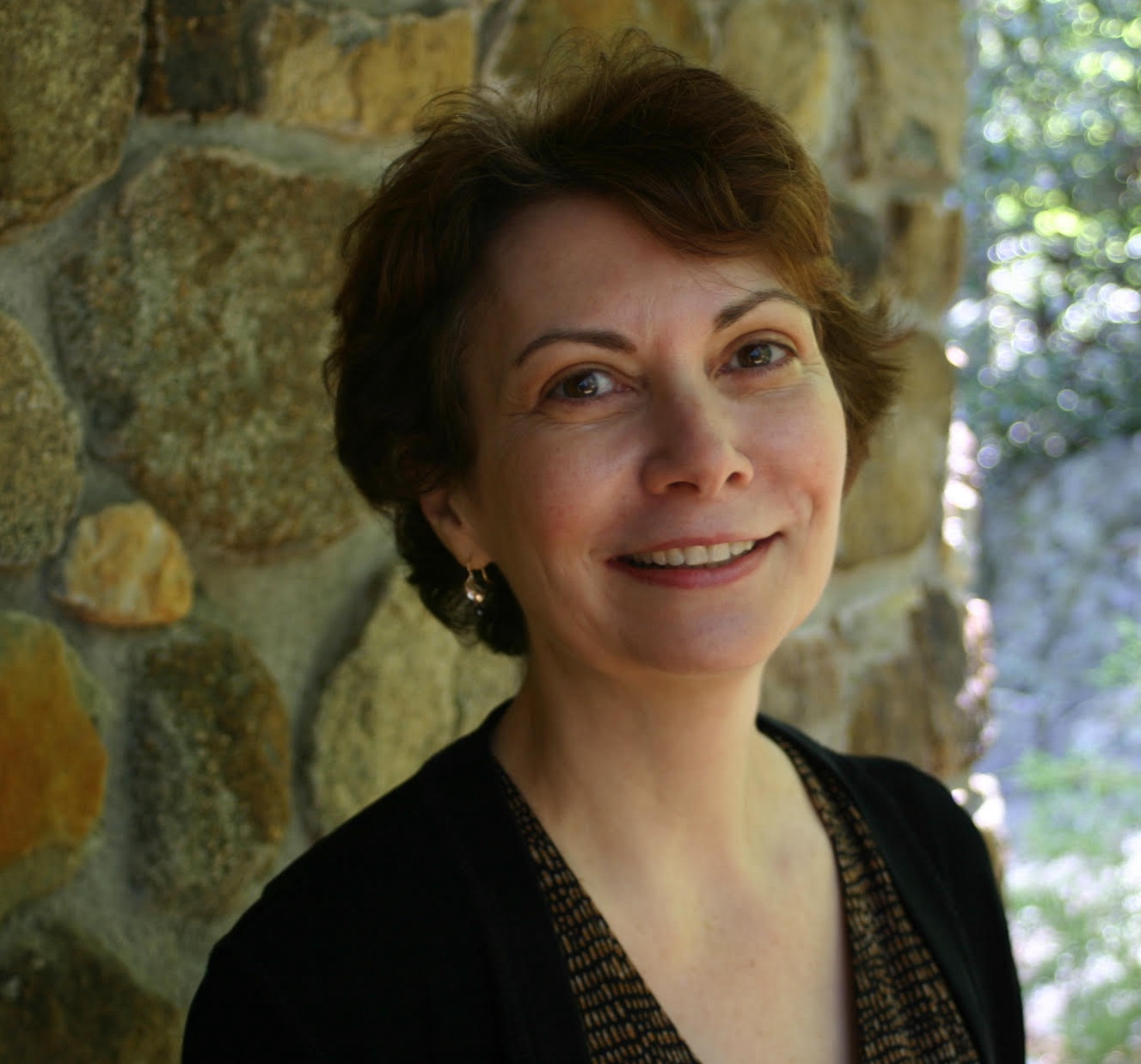
In this conversation, Pamelyn Casto speaks with award-winning haibun poet and longtime editor Roberta Beary about the craft and possibilities of haibun, the hybrid form that braids prose with haiku. Beary discusses why Haibun: A Writer’s Guide (co-written with Lew Watts and Rich Youmans) was born from a surge of submissions—and from a desire to help writers understand the form before sending work out. The interview also turns to Beary’s provocative full-length haibun collection than spans 20 years Crazy Bitches (MACQ Books, 2025), exploring risk, authenticity, and writing for readers who feel unseen.
Pamelyn Casto for O:JA&L: It’s so great to get to interview you and learn more about the art of writing haibun. I mostly want to focus on two of your latest books: Haibun: A Writer’s Guide and Crazy Bitches (which is also widely available elsewhere online).
First, let’s start with Haibun: A Writer’s Guide, written by you, Lew Watts, and Rich Youmans. What prompted you three to create the new book on writing haibun? I view it as modernizing or giving haibun an American spin. What necessity do you see it as filling?
Roberta Beary: The three of us often talked about the need for a haibun craft book. This was based on a rapid rise in submissions we were seeing as longtime haibun editors. Many showed a basic lack of understanding the haibun form. Our hope was that submitters would read Haibun: A Writer’s Guide and learn from it, before submitting haibun for publication.
Casto for O:JA&L: From what I understand, the book was also written in an unusual way. Tell us more about your process of putting the book together.
Beary: During covid, Jude Higgins of Ad Hoc Fiction contacted me about writing a book on haibun for its craft series. The one requirement was that it include writing prompts. I don’t recall how much time elapsed before I put anything down on paper. There were several covid-related delays. Sometime later, Lew Watts, the haibun co-editor for the Haiku Society of America’s journal frogpond, talked to me about doing a haibun craft book. I surprised him by saying I already had a publisher! We asked Rich Youmans, editor of Contemporary Haibun Online, to join as the third co-author. He agreed, and we were off. We had many virtual get-togethers about what a haibun craft book should include. Lew then put together an outline based on those discussions. I immediately sent the outline to Jude Higgins. Although a collaborative craft book was a first for Ad Hoc Fiction, Jude readily gave her approval. I had the idea to write the entire book in haibun form, but that was cast aside fairly quickly. I wrote a draft haibun for the prologue, and both Lew and Rich contributed to the final version. The prologue is called From the Authors. I still get a huge kick out of reading it. In hindsight, From the Authors turned out to be step one of our collaboration. I was able to set the tone for the book’s writing style so that the chapters flow naturally in Haibun: A Writer’s Guide.
Casto for O:JA&L: You mention in the book that haibun is hardly written today in Japan, its birthplace. Why do you think that might be so? Could it be that there is too much discipline and study involved with Japanese haiku? I read somewhere that a serious student of haiku in Japan must study season words and their emotional resonance for five years before becoming learned in just that aspect of haiku.
Beary: We divided responsibility for certain chapters and collaborated on others. Here is a good place to point out that Rich Youman’s extensive knowledge of haibun is reflected in A Brief History of English-Language Haibun (Chapter 2). Reading Haibun, specifically “The 4 Spark Framework” (Chapter 3) is the innovative creation of Lew Watts. I checked with both co-authors and learned there are various theories as to why haibun is not as popular in Japan. It seems that there the focus continues to be on haiku rather than haibun.
When I lived in Tokyo for five years in the 90s, part of my studies included Japanese short form poetry, which fits your description of a ‘serious student of haiku in Japan’. But I can’t think of a single conversation about haibun, other than the strong suggestion that Basho’s Narrow Road to the Deep North should be read on a regular basis. If you are familiar with that work, you will know it is in the form of a haibun travel diary, written by the poet around 1689 during Japan’s Edo period. I alternate between my two copies, one a Penguin Classic, titled The Narrow Road to the Deep North and Other Travel Sketches, given to me during my university days by my brother Kevin (who did the cover for this book). The other copy, which I bought in Japan, is published by Kodansha International, and titled, A Haiku Journey, Basho’s Narrow Road to a Far Province. I like to compare different versions of Japanese books translated into English. I have several different translations of a favorite book of haiku, Salad Anniversary by Machi Tawara.
Casto for O:JA&L: Your book notes that some critics view haibun as little more than private writing–as private diaries and journals. Others view it as travel literature. I think of it as a type of spiritual journey—travel through life’s joys and sorrows, its ups and downs. How do you view it?
Beary: In my 14 years as haibun editor for Modern Haiku, I see many of these travelogue haibun from submitters in which nothing happens. They are purely descriptive. Other people submit navel-gazing haibun, in which the writer expounds on certain zen motifs, such as the transient nature of life. Poets will submit these types of haibun on a consistent basis, notwithstanding that they are rarely accepted.
When I write haibun, it’s to connect with the reader. I hope the reader is changed by the experience of reading my haibun. My reasons for writing any haibun can be distilled down to sharing an experience with the reader that evokes an emotional response. As a trauma survivor, I also write haibun for people who feel their pain is too big to voice.
Casto for O:JA&L: I love what you call in the book the “Holy Trinity of Haibun.” I particularly appreciate your statement that the haiku must “reflect or expand the prose but does not repeat it.” Do you think it’s in that aspect that many novice writers most often go wrong?
Beary: There are so many ways (not just) novice writers go wrong that this answer might wind up as a list poem! But yes, it often happens that the haiku merely is an extension of the prose in three short lines consisting of 5-7-5 syllables. Another thing I see quite a bit is haiku that summarize the prose. This occurs when the writer doesn’t trust their reader. In that case, the haiku is less of an extension and more of an explanation.
Casto for O:JA&L: You say in your book that haibun “defies strict impositions and boundaries.” Yet so many want to keep it restricted, so rule-bound, it can’t quite lift off the ground. Why do you think so many prefer rules instead of artistic innovation? As haibun editor at Modern Haiku, what do you see most of in the way of submissions?
Beary: I most often see haibun by non-risk-taking writers. When that happens, a haibun submission consists of one layer of one interpretation. I call these one-dimensional haibun. Often they describe a nostalgic scene from childhood, like opening a Christmas present. These haibun will leave out the untold story, about not getting that one gift that was in their letter to Santa. I used to return these with a comment, ‘dig deeper’ but the Modern Haiku submissions have ramped up so much that I no longer have time. Equally frustrating is when some writers keep submitting the same kind of superficial haibun. For example, a final line in the prose that explains the haibun, or an inability to stretch the haibun boundary by trying a time shift either in the prose or haiku, or a title that is both mundane and overused.
I’ve noticed that the non-risk takers often will write haibun about someone else, because that is how the story was told to them. A best friend describes getting drunk at the prom and having their date leave with someone else, or a spouse describes growing up in foster care. When I ask the writer to consider switching to first person, present tense, to have their haibun make more of an impact on the reader, I am told, ‘It didn’t happen to me so I cannot make that change.’ Haibun that resonate with readers tell all the truth but tell it slant. A bit of empathy, the ability to put yourself in someone else’s shoes, goes a long way in writing an authentic haibun.
Also, if you feel the need to explain your haibun in footnotes, the chances are good that it will not be published in Modern Haiku.
Casto for O:JA&L: In my own explorations of haibun, I read somewhere that Cor van den Heuvel claimed that haibun can even be written without haiku. I wonder, then, if that’s the case, what might set it apart from prose poetry or poetic prose?
Beary: Well, for me, that is a hard ‘no’. A haibun needs three parts: title, prose, and at least one haiku. Still, I find that writers of prose poetry who have cracked the haiku code can write exceptional haibun. That is also true for flash fiction writers.
Casto for O:JA&L: And speaking of artistic creations, your recently published book of haibun, Crazy Bitches, certainly has an arresting and provocative title. As you know, calling problematic women “crazy bitches” is derogatory and dismissive, used to belittle and to silence women. Have you ever had to wear the label yourself?
Beary: Yes. When what I say or do is outside the norm of a certain type of recipient’s experience, the term crazy bitch is used by them as an automatic response. The more educated will use terms like irrational or illogical. In today’s polarized society, many are afraid of bearing witness to strong women. But there is nothing new in that. I imagine Joan of Arc was called the equivalent of crazy bitch.
Casto for O:JA&L: Crazy Bitches is innovative in many ways. In it, you manage to bring haibun to interesting levels. You say your goal for this collection was to write for people who feel unseen and unheard—you want them to know you hear them, that they are not alone. I think you definitely achieve that goal. Readers often find great value in pieces that resonate with their own experience. You write of the situations that are difficult to admit. The pieces are amusing, surprising, disturbing, and some are downright frightening. How did you go about selecting which women you’d use as example stories?
Beary: I would be interested in knowing which ones you consider frightening. To me, the haibun cover a range of abnormally normal experiences. I often hear from readers of Crazy Bitches via my webpage. What they say can be summed up in one sentence: ‘I thought I was the only one.’ I am immensely grateful to these readers for contacting me.
Casto for O:JA&L: Would you say your style of haibun leans more toward flash fiction-type pieces and creative nonfiction? What might separate the forms?
Beary: I would say my haibun is more creative nonfiction. That is, based on events that happened to me or to someone close to me, or someone I admire, but then changed either in setting or time period. I like the freedom that creative non-fiction affords the writer. Regarding flash fiction, I will rework a flash piece into a haibun and vice versa. Usually those pieces have been in my drafts folder for a few years. I highly recommend the process of going through old drafts with fresh eyes.
Casto for O:JA&L: In an essay in Blythe Spirit (2019), you said, “nothing is more fatal to writing than the fear of offending.” You also said the emotion must be real and that no subject is off limits. You certainly came through with those ideas in Crazy Bitches. How difficult was it for you to overcome the fear of offending? I’m still working on it myself.
Beary: I imagine myself as the sole survivor of my family of origin. That works pretty well for me. You are right that the emotion must be authentic. That is rule number one in my writing. Fear of offending must give way to authenticity.
Casto for O:JA&L: Well, it’s been delightful and instructive to interview you. Thank you for sharing your time and knowledge. And thank you for your books! Writers who love writing and reading haibun will definitely want to get copies of both.
MASTERS SERIES UPDATE:
The Haiku Foundation’s Touchstone Distinguished Books Program has awarded an Honorable Mention to Roberta Beary’s 2025 book of haibun entitled Crazy Bitches (MACQ Books, 2025). For the full text of the official notice, CLICK HERE.
Roberta Beary’s book of haibun Crazy Bitches (MACQ Books, 2025) was named a 2026 finalist in the short story category for the Erik Hoffer Book Award, an honor conferred by the Erik Hoffer Project. For the full list of ERIK HOFFER AWARD finalists in all categories, CLICK HERE.
About the writer:
Roberta Beary is an award-winning American poet, editor, and retired finance attorney. Beary began intensive haiku studies while residing in Tokyo during the 1990s. Since 2012, Beary has served as the haibun editor for the literary journal Modern Haiku. Beary’s acclaimed poetry collections include The Unworn Necklace, a finalist for the Poetry Society of America’s William Carlos Williams Book Award, and Deflection. Additional published works encompass the 2024 collection Carousel and the 2025 book Crazy Bitches. Beary also co-authored Haibun: A Writer’s Guide. Annually dividing time between the United States and Ireland, Beary frequently serves as an international poetry contest judge.
About the interviewer:
PAMELYN CASTO, twice a Pushcart Prize nominee, has published feature-length articles on flash fiction in Writer’s Digest (and in their other publications), Fiction Southeast, and Writing World (and elsewhere). Her essay on flash fiction and myth appears in Rose Metal Press’s Field Guide to Writing Flash Fiction: Tips from Editors, Teachers, and Writers in the Field and her 8,000-word essay on flash fiction is included in Books and Beyond: The Greenwood Encyclopedia Of New American Reading (4 volumes). She also has a 5,000-word article on flash fiction as the lead article in the new book Critical Insights: Flash Fiction. Subscribe to her free online monthly flashfictionflash newsletter (first issue published in 2001) for markets, contests, and publishing news for flash literature writers. Casto is an Associate Editor at O:JA&L. Pamelyn Casto’s new book Flash Fiction: Alive in The Flicker (A Portable Workshop), a new release from O:JA&L’s Buttonhook Press, is available now on Amazon.
Image: The Heart of Haibun by Kevin Beary. Acrylic on Masonite. 16 x 24 inches. 2010. By permission.
OJAL Art Incorporated, publishing since 2017 as OPEN: Journal of Arts & Letters (O:JA&L) and its imprints Buttonhook Press, HOT BUTTON PRESS Contemporary Issues, and HIGH BUTTON PRESS Contemporary Art, supports writers and artists worldwide.
 The Buttonhook Press Masters Series
The Buttonhook Press Masters Series (from OPEN: Journal of Arts & Letters and its Buttonhook Press imprint) gathers acclaimed writers for concise, downloadable chapbooks that pair fresh work with candid reflections on craft. Each installment—often framed by an interview with an associate editor—opens a window onto how masters of poetry, prose poetry, flash fiction, and related hybrid forms build voice, compression, and surprise. Designed as a reader’s invitation and a writer’s toolbox, the series celebrates literary art that moves fast, cuts deep, and lingers long after the last line.
Click on the titles below to explore or download the free PDF chapbooks.
Prose Poetry and Flash Discourse
The Buttonhook Press Masters Series: Brian Clements on Prose Poetry
With an Interview by Associate Editor Pamelyn Casto
The Buttonhook Press Masters Series: Mark Budman on Flash Discourse
With an Interview by Associate Editor Pamelyn Casto
The Buttonhook Press Masters Series: Ray Gonzalez on Prose Poetry
With an Interview by Associate Editor Pamelyn Casto
The Buttonhook Press Master Series: Michael Martone on Flash Fiction
With an Interview by Associate Editor Pamelyn Casto
The Buttonhook Press Master Series: Roberta Allen on Flash Fiction
With an Interview by Associate Editor Pamelyn Casto
The Buttonhook Press Master Series: Peter Conners on Flash Fiction
With an Interview by Associate Editor Pamelyn Casto
The Buttonhook Press Masters Series: Maxine Chernoff on Prose Poetry
With an Interview by Associate Editor Pamelyn Casto
The Buttonhook Press Masters Series: Pedro Ponce on Flash Fiction
With an Interview by Associate Editor Pamelyn Casto
The Buttonhook Press Masters Series: Kent Dixon on Flash Fiction & Nonfiction
With an interview by Associate Editor Pamelyn Casto
Experimental Discourse
The Buttonhook Press Masters Series: Jim Meirose on Experimental Discourse (XP)
With an interview by Associate Editor Warwick Newnham
Poetry: All forms & styles
The Buttonhook Press Masters Series: Poetry from Bruce McRae
With an Interview by Associate Editor Jeff Streeby
The Buttonhook Press Masters Series: Poetry from Richard Widerkehr
With an Interview by Associate Editor Jeff Streeby
More titles in press

