

HAL: Heuristic Algorithmic Library
American Chapbooks: Reconfiguring Literary and Artistic Prestige
OPTIMAL OR NOT and Other Poems by Heikki Huotari
A REVIEW
Click on the title OPTIMAL or NOT and Oher Poems to explore or download the free PDF chapbook.
Click on the title A REVIEW to download the free PDF pamphlet.
Title: Optimal or Not and Other Poems
Author: Heikki Huotari
Publisher: Buttonhook Press, an imprint of OPEN: Journal of Arts & Letters
Year: 2024
ISBN: Not specified
Heikki Huotari’s chapbook, Optimal or Not and Other Poems, is a dazzling exploration of intellect, irony, and existential inquiry. The collection opens with a sense of playful seriousness, inviting readers to “choose a cosmos” and “ask the numerator the denominator’s name,” immediately signaling a poetic landscape where mathematics, philosophy, and everyday absurdity intermingle. Huotari, a retired mathematician, brings a unique analytical rigor to his verse, but tempers it with wit and a deep sense of wonder. The chapbook’s tone is both cerebral and accessible, offering a rich experience for readers who appreciate poetry that challenges and delights in equal measure.
The central themes of the collection revolve around the interplay of logic and emotion, the search for meaning in randomness, and the tension between order and chaos. Poems like “Optimal Or Not” and “Wherein I Check My Intellect” probe the boundaries of rational thought, questioning the reliability of perception and the nature of truth. The poet’s background in mathematics is evident, as he frequently employs scientific and mathematical metaphors—“interval of confidence,” “angular momentum,” “equivalence relation”—to interrogate the human condition.
Yet, Huotari’s work is not cold or detached. There is a persistent undercurrent of vulnerability and humor. In “Wheatfield With Crows,” the poet muses, “I failed to change the world so may I buy some rain. What is Franz Kafka going on about. What does not move is of no interest. Firming expectation up I pity those poor souls who fail to meet my expectation. Contradiction pops into existence. I am of two hearts. No Nobel Prize for me today.” This passage exemplifies the collection’s blend of existential questioning and self-effacing wit
Huotari’s style is marked by dense, allusive language and a penchant for juxtaposition. His poems often begin with declarative statements or rhetorical questions, then spiral outward into associative leaps. The use of imagery is both concrete and abstract; for example, “The lilies are but vehicles, the closest points in compact convex sets to other compact convex sets, great parallelograms of white, my public and my private lives, my irony, my ice cream and my cognitive decline”. Here, mathematical terminology is woven seamlessly into the fabric of everyday experience.
The poet employs a variety of forms, from prose-like blocks to more traditional stanzas. Line breaks and enjambment are used to create a sense of momentum and surprise. Huotari also makes frequent use of indented block quotes and forward slashes to indicate line breaks in shorter quotes, as recommended in the review structure.
The chapbook is organized thematically rather than narratively, with each poem functioning as a discrete meditation on a particular concept or experience. The table of contents reveals a wide range of subjects, from “Rhapsody In Ultraviolet” to “How to Stop a Glockenspiel” and “Three And Five Are Relatively Prime”. This diversity reflects Huotari’s restless intellect and his refusal to settle for easy answers.
There is, however, a subtle arc to the collection. The opening poems establish the poet’s philosophical concerns, while later pieces delve into more personal territory—memory, identity, and mortality. The final poems, such as “Bless Your Heart” and “What Will Martians Make of Us?”, offer a kind of cosmic perspective, suggesting that the search for meaning is both universal and endlessly elusive.
Huotari’s poems are rich with quotable lines that illustrate his style and thematic concerns. For example:
“With belief and disbelief suspended equally, is this the cosmos that you chose? When in the house of mirrors I instantiate, I take my place on a tectonic plate and rotate slowly, autonomic nervous system kicking in.”
“She loves me or she loves me not is my tautology, she loves me and she loves me not my contradiction – I have all the bases covered.”
“An atavism and an entourage but binding, in the glimmer of the gray mainframe the village white-hat hacker basks. If nature hates a vacuum you can too.”
These lines demonstrate Huotari’s ability to blend philosophical inquiry with playful language and vivid imagery.
Heikki Huotari’s chapbook stands out for its intellectual ambition and stylistic inventiveness. The poems are challenging but rewarding, demanding active engagement from the reader. Compared to Huotari’s previous collections, such as Scaffold and Mirage and Acceleration Due To Gravity, this chapbook continues his exploration of mathematical and existential themes, but with a greater emphasis on humor and self-awareness.
In the context of contemporary poetry, Huotari’s work is notable for its fusion of scientific language and poetic sensibility. While many poets shy away from technical terminology, Huotari embraces it, using it as a tool for both precision and play. His poems recall the work of writers like Rae Armantrout and Jorie Graham, who similarly blur the boundaries between science and art.
Heikki Huotari’s Optimal Or Not and Other Poems is a remarkable chapbook that rewards careful reading and active engagement. Its blend of intellectual rigor, existential questioning, and playful wit makes it a standout in the field of contemporary poetry. Readers who enjoy poetry that challenges assumptions, delights in language, and explores the mysteries of existence will find much to admire here.
The collection is especially recommended for those with an interest in mathematics, philosophy, or the intersection of science and art. Huotari’s unique voice and inventive style ensure that each poem offers something new, whether it’s a fresh perspective on logic, a meditation on identity, or a wry observation about the absurdities of life.
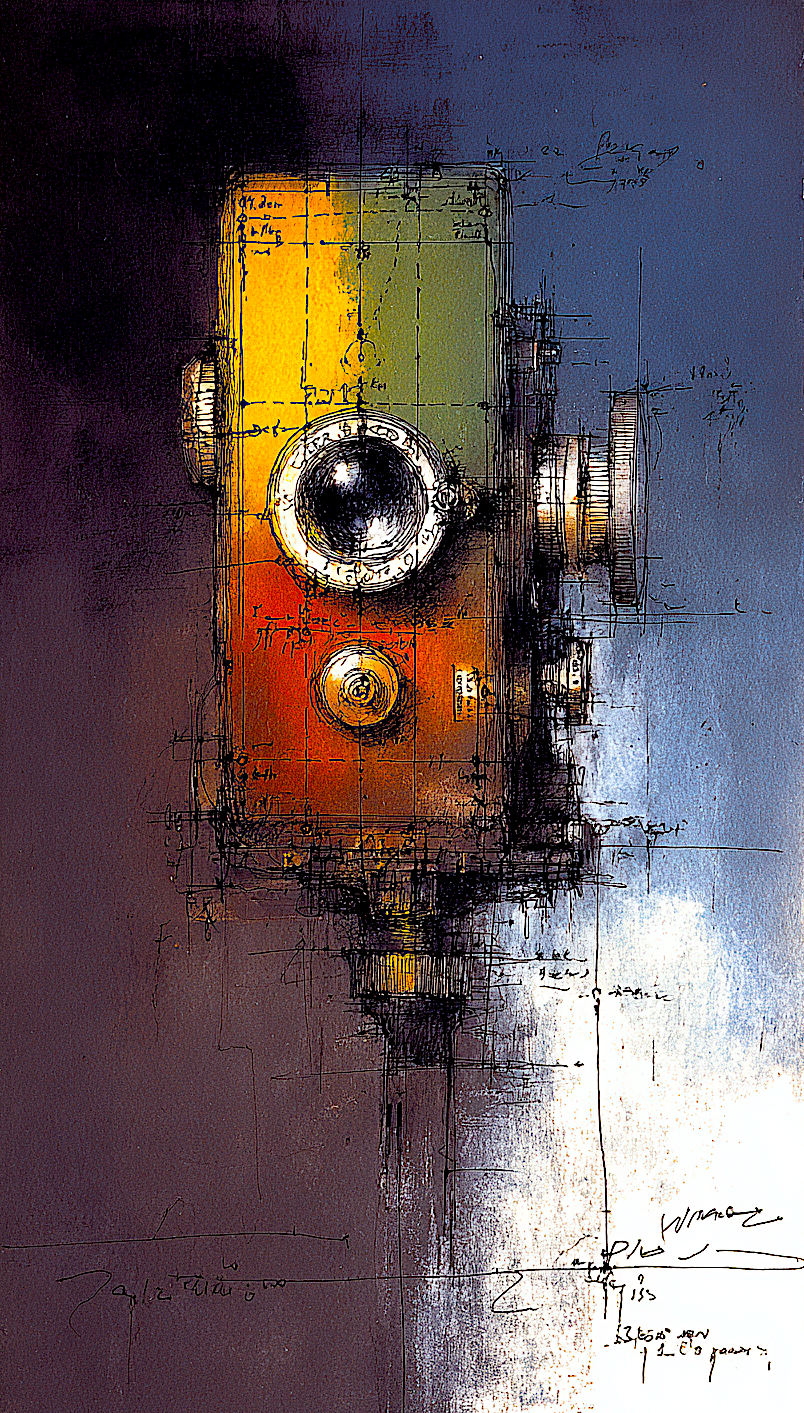
Image: I’m Sorry, Dave #11 (AI-assisted digital image) by O:JA&L staff creative. 2026. Public domain by Midjourney AI.
OJAL Art Incorporated, publishing since 2017 as OPEN: Journal of Arts & Letters (O:JA&L) and its imprints Buttonhook Press, HOT BUTTON PRESS Contemporary Issues, and HIGH BUTTON PRESS Contemporary Art, supports writers and artists worldwide.
HAL: Heuristic Algorithmic Library
Issues of Contemporary Aesthetic: A Series
Click on the titles below to explore or download the free PDF documents.
The Outrun by Julie Alden Cullinane: A REVIEW
Miro’s Wars by John Brantingham: A REVIEW
Stories Begging Color by Larry D. Thomas: A REVIEW
OPTIMAL OR NOT and other poems by Heikki Huotari: A REVIEW
Experimental Discourse: A Productive Labor
A consideration of the work of Jim Meirose
Larry D. Thomas and the Evolution of the American Chapbook
A consideration of the writing of Larry D. Thomas
Mick McGrath and the Samizdat Tradition
A consideration of the published prose of Mick McGrath
Richard Widerkehr: A Poet of Place, Memory, and Quiet Epiphany
A consideration of the poetry of Richard Widerkehr
The O:JA&L Masters Series
An introduction to the O:JA&L Masters series
BUTTONHOOK PRESS MASTERS SERIES
Click on the titles to explore or download the free PDF chapbooks.
The Buttonhook Press Masters Series: Brian Clements on Prose Poetry
With an Interview by Associate Editor Pamelyn Casto
The Buttonhook Press Masters Series: Mark Budman on Flash Discourse
With an Interview by Associate Editor Pamelyn Casto
The Buttonhook Press Masters Series: Ray Gonzalez on Prose Poetry
With an Interview by Associate Editor Pamelyn Casto
The Buttonhook Press Master Series: Michael Martone on Flash Fiction
With an Interview by Associate Editor Pamelyn Casto
The Buttonhook Press Master Series: Roberta Allen on Flash Fiction
With an Interview by Associate Editor Pamelyn Casto
The Buttonhook Press Master Series: Peter Conners on Flash Fiction
With an Interview by Associate Editor Pamelyn Casto
The Buttonhook Press Masters Series: Maxine Chernoff on Prose Poetry
With an Interview by Associate Editor Pamelyn Casto
The Buttonhook Press Masters Series: Pedro Ponce on Flash Fiction
With an Interview by Associate Editor Pamelyn Casto
The Buttonhook Press Masters Series: Tom Hazuka on Flash Fiction
With an Interview by Associate Editor Pamelyn Casto
The Buttonhook Press Masters Series: Kent Dixon on Flash Fiction & Nonfiction
With an Interview by Associate Editor Pamelyn Casto
The Buttonhook Press Masters Series: Jim Meirose on Experimental Discourse
With an interview by Associate Editor Warwick Newnham
O:JA&L’S HIGH BUTTON PRESS ART CHAPBOOKS
Click on the titles to explore or download the free PDF chapbooks.
RITES OF CALIBRATION: Images & Excerpts
Fine Art Photography by Rex Wilder
Fine Art Photography by Natalie Christensen
Painting and drawing by Anne-Marie Brown
BY LAND AND BY SEA: Awakening the Sensual
Sculpture and Installation by Mark Yale Harris
Painting and drawing by Bette Ridgeway
Painting and drawing by Kathleen Frank
Painting and drawing by Catherine Eaton Skinner
Implications of Energy
Artist portfolio of Dr. Ernest Williams III

