

O:JA&L Flash Nonfiction: CNF/Memoir/Vignette
Jennifer Anderson
ELECTRIC YOUTH
I told my mother I’d burned my hand on a frying pan, scorching the soft flesh between my thumb and forefinger while I scrambled eggs. A lie. Same as the one I once told to hide the hickey a boy left on my neck, the bruise I tried to mask by pressing a hot curling iron against it. An accident, I insisted, while doing my hair.
Thick curtains obscured the sun the afternoon I sat in Kelly’s basement and branded my hand with the hot metal end of her stepfather’s Bic. I don’t know whose idea it was, only that we were best friends at the time and I believed our scars would forever bond us. Two girls who emptied bottles of nail polish into sandwich baggies, swirling reds and pinks as if we were artists before cupping them over our noses to inhale ourselves dizzy. Girls who took turns leaning against my bedroom door, who pressed our palms against each other’s hearts until our breathing stopped and we fell to the floor.
In the field halfway between our houses, we crouched, our backs to the buzzing streetlight, and lit our first cigarettes, butts scavenged from her stepfather’s ashtray. Our bodies tingled, and we lay on the dirt trail to hold onto that feeling. To mask the smell of smoke, I sprayed our coats with the bottle of Electric Youth perfume I carried in my pocket, but the Tic Tac she gave me couldn’t melt the taste from my tongue. Months later, in that same dark field, the air heavy with lilac, we punched holes into the side of a pop can with a thumbtack. I flicked the lighter to help her see while she dusted the holes with the marijuana she found in her stepfather’s closet, hidden beneath the pastel polo shirts he wore to the country club. And she worked the lighter for me while I pressed the mouth of the can to my lips.
Months later still, when my mother found a note in the pocket of my jeans, one about buying pot, Kelly lied for me. She followed my mother into her bedroom and promised her I’d never do drugs again. She’d see to it. Kelly was moving soon, and because my mother still trusted her, she let me spend the final weeks of summer at her new home in Oregon, 450 miles away. This was where I sat on a bench in an unlit park at midnight and dropped my first hit of acid without knowing what the boy, a stranger, placed on my tongue. It was where I camped in the rainforest with her new friends, all of us tripping, and leaped from a cliff thick with moss and fern. Kelly went first, arms folded across her chest, long brown hair awhirl. I hesitated at the edge only a moment, reeling from the drugs, the height, then closed my eyes and jumped.
I knew my mother didn’t believe my lie about the burn.
It should have resembled a smiley face with neat, narrow lines. The way Kelly’s turned out. But I pressed the hot metal against my hand too long, singeing my flesh past the nerves, so deep I didn’t feel any pain.
“How could a frying pan do this?” my mother asked.
She was a registered nurse and tended most of my wounds, slivers she dug from my feet with a sterilized sewing needle, bee stings she soothed with a cold compress. But she didn’t mention the burn again and didn’t offer anything to help me heal.
For years, I hoped the scar would soften and fade. When I caught people staring at it, I covered it with my other hand. Now I mostly forget it’s there. White and skull-shaped, a raised “O” of untouched skin where the mouth should have worn a permanent grin.
About the writer:
Jennifer Anderson is an associate professor at Lewis-Clark State College in Lewiston, Idaho, where she is also the faculty advisor for the college’s student-run literary journal, Talking River Review. Her creative nonfiction has appeared in Fourth Genre, Brevity, The Cimarron Review, The Colorado Review, and The Carolina Quarterly, among other places. In 2019, Anderson won The Missouri Review‘s Jeffrey E. Smith Editors’ Prize for nonfiction.
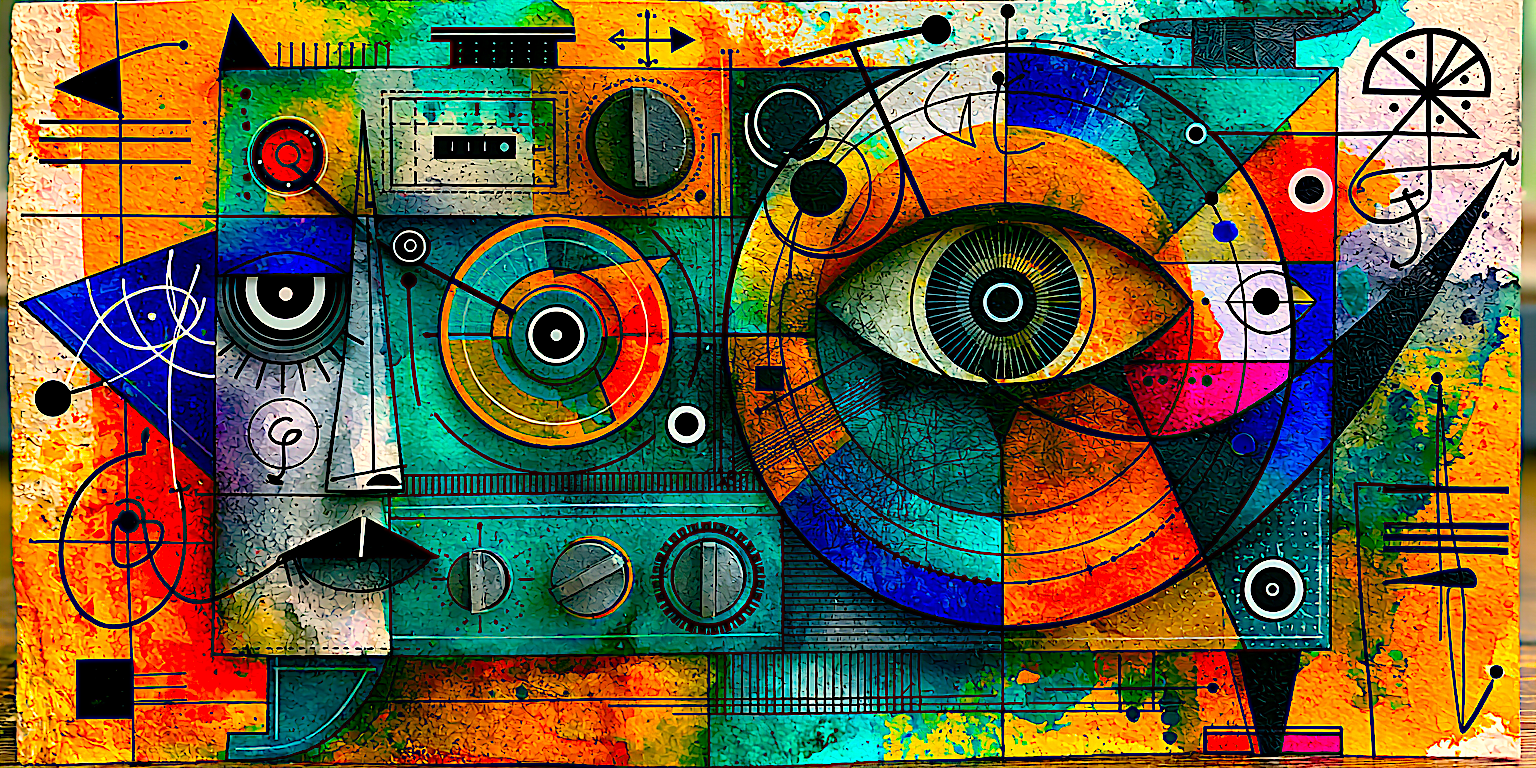
Image: The Heat in the Kitchen (AI-assisted digital image) by O:JA&L staff creative. 2026. Public domain via Midjourney AI.
OJAL Art Incorporated, publishing since 2017 as OPEN: Journal of Arts & Letters (O:JA&L)
and its several imprints, including Buttonhook Press,
HOT BUTTON PRESS Contemporary Controversies, and HIGH BUTTON PRESS Contemporary Art,
supports writers and artists worldwide.
HAL: HEURISTIC ALGORITHMIC LIBRARY
CLOSE READINGS
HAL’s Close Reading series foregrounds HAL’s commitment to sustained attention at the level of line, image, syntax, rhythm, and implication. Rather than treating poems as illustrations of theory, these pamphlets move patiently through particular works, showing how meaning emerges from pressure, pacing, diction, and structural choice. The series includes readings of poems by Bruce McRae, Richard Widerkehr, Samantha Padgett, Sean Wang, and others, often linking formal detail to ethical, civic, ecological, or metaphysical concerns. In doing so, the section models close reading as both a literary method and a disciplined act of imaginative listening.
Click on the titles below to explore or download the free PDF pamphlets.
SPEAKING THE OVERFULL WORLD:
A Close Reading of Bruce McRae’s Poem “All In”
THE BURDENS OF INTIMACY:
A Close Reading of Richard Widerkehr’s Poem “Two Solitudes”
PROCEDURAL DREAD: THE VIA DOLOROSA OF THE CHECKOUT LINE
A Close Reading of “I Misplace My Humanity at the Grocery Store,” a poem by Samantha Padgett
PROCEDURAL DREAD AND THE DIAGNOSIS OF CIVIC DISEMPOWERMENT
A Contextual Reading of “I Misplace My Humanity at the Grocery Store,” a poem by Samantha Padgett
Click HERE to read the poem “I Misplace My Humanity at the Grocery Store.”
THE SPUR OF MEANING: PROSODY AS IMPULSION
A Close Reading of Ringwork, A Poem by Sean Wang

