

The 2026 O:JA&L Masters Series: Flash Fiction
Featured Writer Interview
Associate Editor Jeff Streeby
INTERVIEW WITH RICHARD WIDERKEHR
Click HERE to explore or download Richard Widerkehr’s free PDF chapbook WHAT ON EARTH?
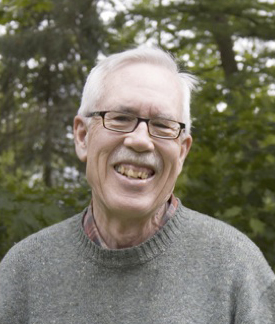
Across decades of writing, teaching, and attentive living, RICHARD WIDERKEHR has developed a body of work marked by lyric precision, moral seriousness, and a deep fidelity to place, family, and the inner life. His poems—often rooted in the landscapes of the Pacific Northwest—move fluidly between memory and imagination, the personal and the archetypal, the seen world and what lies just beyond it. In this wide‑ranging interview, Widerkehr reflects on the formative influences that shaped his poetic voice, from early literary mentors and formal study to the quieter educations of work, illness, and care. He speaks candidly about writing practices, revision, form, and failure; about the ethical challenges of turning lived experience into art; and about sustaining a creative life outside the glare of literary celebrity. What emerges is a portrait of a poet committed less to spectacle than to attention—one who understands poetry as both a craft honed over time and a way of remaining permeable to the world’s griefs, gifts, and ongoing surprises.
Streeby for O:JA&L: How have your formal education and any significant mentors or informal experiences shaped your poetic voice and approach?
Richard Widerkehr: When I was an undergraduate, I read a lot of English and American literature, some Greek drama and Russian novels. In grad school at Columbia, we read the English Romantic poets, and I wrote my Master’s thesis on Coleridge’s later poems. In my twenties as I taught and tutored mostly part-time and had what I would later call a part-time life, I read Hardy, Lawrence, James, Dickens, Dostoevsky, Hemingway, Faulkner, and Fitzgerald. Poets that meant a lot to me were Shakespeare, Keats, Yeats, Coleridge, Whitman, Dickinson, Frost, Eliot, Reothke, Sylvia Plath, Ginsberg, and James Wright.
One of my mentors at the University of Michigan was Robert Haugh, who focused on what he called place images in fiction. We read stories built not on plot and rising action, but ones whose climax is a moment of emotion and/or insight. For example, maybe you know Jame’s Joyce’s short story, “Araby,” where a young boy goes to a bazaar he has built his hopes on, but he is disillusioned.
After I moved to Bellingham, I took more writing classes at Western Washington University. A short story I wrote in a class taught by Lynda Schor turned into what would become my novel, Sedimental Journey. Other teachers at WWU who encouraged me were Kelly Cherry, William Wiser, Jim Rogers, and Mary Elsie Robertson. They even gave me blurbs years later when the book was published by Tarragon Books in Bellingham, for it took nine years to write, fifteen more to get published.
After I won a prize in a short story contest judged by an editor in New York, Sedimental came close with him. He and an agent I met both said I needed to cut the book somewhat and find a better ending. After sulking a while, I rewrote the book. Again, close but no cigar. I tried other presses, was a finalist in a contest, but no. In 2005, my wife and I went to a psychic fair where a friend of hers was selling her jewelry. I met a former classmate who had a small press. She asked me what happened to the novel. I gave it to her, and she published it.
By then it was 2005. I had gone back to writing poems, my first love. In 2012, after some health problems, I decided to submit poems simultaneously to many places. Got quite a few published. That led to books of poems. During this time, I continued to take courses for a week in the summer at Centrum, worked with poets such as Joseph Stroud, Erin Belieu, Peggy Shumaker, Agha Shahid Ali, Jane Hirschfield, Mark Doty, Gary Copeland Lilley, and a fiction writer, Craig Lesley. Over the years, I had been corresponding with Patricia Hooper, who read my poems and commented with specific suggestions and encouragement. She has been my unofficial mentor.
Streeby for O:JA&L: In what ways have your roles outside poetry (such as teaching or case management) influenced your subject matter and style?
Richard Widerkehr: My background in teaching helped when I wrote my novel, Sedimental Journey, which is about a funny-sad geology prof who sees himself as a man of facts but falls in love with a fictional character. In a class I took from Annie Dillard, one assignment had been to write in the voice of someone else. I wrote from the POV of a hippie woman named Cheryl. When I wrote my novel, I was learning how to write on the edge of fantasy and reality, for the fictional character, Eloise, shows up in the real world. My teacher, Lynda Schor, told me the story didn’t have to be funny to be good. It would take me nine years to finish as I worked minimum-wage jobs for the most part. Bellingham was a very cheap place to live back then. My work as a case manager has led to some poems, but I have had to change names, gender, identifying details, and make composite characters. Sometimes, I’ve gone toward magical realism, since I’m not allowed to tell the stories.
Streeby for O:JA&L: Was there a pivotal moment or experience that led you to pursue publication? What inspired that decision?
Richard Widerkehr: I started writing poems at age sixteen, which was a pivotal moment. In my freshman year at the University of Michigan, I submitted poems to the Hopwood Contest, for I had read and admired Patricia Hooper’s work in the college literary magazine, Generation, and also read her prize-winning manuscripts. I would not win until my junior year. By then I was in a class with one of the editors of Generation. After class, he asked me to submit a poem, and I wrote down from memory a poem about playing chess with my father, but I made a mistake, used the word “brilliant” twice in one line. Years later as I put together old poems and new ones in my fifth book, Missing the Owl, I deleted the repetition but used “brilliant” in the last line, making an ending that satisfied me more.
Streeby for O:JA&L: How do recognitions, awards, and your reputation within the literary community affect your sense of responsibility and belonging as a poet?
Richard Widerkehr: Awards have often motivated me to write more, but they have this risk. Sometimes, reaching for the brass ring at the center of the merry-go-round has made me forget how writing well can make us feel more alive, more attentive to the world around us. My writing community for many years has been a group I met at Centrum, a writers’ conference in the summer in Port Townsend, Washington. In the winter we would rent a barracks at Fort Worden for a week, cook and clean together, do free writes and writing exercises. We had fun and became good friends, called ourselves the Madronas, after the name of our barracks.
Streeby for O:JA&L: Many of your O:JA&L poems—such as “Deer in Fog at Twilight Near Squalicum Lake Road,” “Potter’s Valley Road,” and “West: Toward Squalicum Mountain”—evoke vivid landscapes and a strong sense of place. How does the Pacific Northwest, or specific locations, shape your poetic imagination and themes?
Richard Widerkehr: In the years I taught in New York and Honolulu, I wrote in pocket notebooks but did not complete that many poems. The Pacific Northwest, which I had visited several times, may have been calling to me. I moved to Skagit Valley where I had a few friends, and then to Bellingham to take classes with Annie Dillard. In my poem, ”Potter’s Valley Road,” some details came from a friend’s story about himself, and the nature details were what I had come to know here. About “West Toward Squalicum Mountain,” I had met a woman at the Subdued String Band Jamboree in Deming, WA, who plays a dulcimer. The gray sun like a mustard seed at the end of this poem was a gift I got from writing my first draft quickly and then reworking it many times, my usual practice
Streeby for O:JA&L: In “When We Send My Sister Birkenstocks, She Gives Them Away” and “At O’Hare Airport: Her Foxgloves,” you touch on family, illness, and generational memory. How do personal and family histories inform your poetry, especially in the works published by O:JA&L?
Richard Widerkehr: Family history is at the heart of what I write, and so are the nature poems. When I was young, I did not think family was that important, and I moved from Detroit, Michigan, to go to grad school in New York City. My sister’s mental illness changed everything. Later on, I would become a case manager at a mental health clinic, where I had been teaching a writing and educational skills class to out-patients. Later, I came to work on the mental health unit of a hospital where the charge nurse had me sing songs with the patients, which I liked doing.
My mother and father’s deaths had a big effect on me. I started going to synagogue to say the Mourners Kaddish for my father in 2005, and I kept on going, studied for my Adult Bar Mitzvah, and was called to the Torah in 2012. My mother, who was not Jewish but had converted to keep peace in the family, told me, “Remember you’re half-Christian.” Well, no, I thought, and later put this in a poem. She and my father had moved across the country to try and help my sister. I have written so many poems to/for/from/about her, as my teacher Peggy Shumacher suggested, that she (my sister) is almost one of my muses.
Writing about illness, and about mental illness, is tricky. I had started saying prayers when I first went to work as a case manager. How some people can keep a certain core essence intact, who they are, when besieged by such an illness amazed me. Once I watched a training video where a woman who hears accusing voices rides a bus. In the video, I saw what she saw, heard through earphones what she heard, got an inkling of what it must be like to experience such an ordeal.
About memory and imagination, I recall Annie Dillard saying that when you write a memoir, your memories get replaced by what you write. In his Letters To A Young Poet, Rilke advised his young friend not to do it unless he felt he had to. I can’t really say how memory and imagination come together for me and cohere organically in a poem. A good friend calls some of my sister poems benedictions. Maybe, “When We Send My Sister Birkenstocks…” can be read that way.
Streeby for O:JA&L: Your O:JA&L portfolio includes lyric, narrative, and list poems (such as “Biloxi”). What draws you to experiment with different poetic forms. How do you decide which form best suits a particular subject or emotional tone?
Richard Widerkehr: I had not seen that “Biloxi” is a list poem, so thanks for pointing that out. I do like poems with lots of quirky details. Although most of what I write is in free verse, I have written in traditional forms, too. Often, I don’t see what happens in my poem as a decision, but more like something that comes to me, and then it becomes something else, as I work on it. If I get a first line in blank verse, the poem might be a a villanelle or a pantoum, if I really like the line. When I write from a prompt (a word or a phrase), I am probably aware of a certain tone I have to maintain, but sometimes the key of the poem might change from major to minor, as it does in a lot of Beatles songs, and change back again, as in some Jewish songs, which can be dramatic. Sometimes, as I work on a poem, I may try on a different point of view. If two different voices seem to conflict, this may become two poems. It hardly feels like a decision to me, more like I have jumped into deep water, and I try to swim across the river. Maybe I make decisions I am not aware of making, if that makes any sense.
Streeby for O:JA&L: “In the Hall of North American Mammals: Museum of Natural History” and “Sympathy for the Scarecrow” both engage with art, dioramas, and the natural world. How do visual art and museum spaces inspire your writing process?
Richard Widerkehr: I don’t know where inspiration comes from. I try things out and sometimes get lucky. To digress for a minute, Plato did not want to let poets into his ideal republic ruled by his philosopher king. He thought we deal in shadows, not the truth, and we can’t even say how we do it.
About “In the Hall of North American Mammals,” I probably wanted to evoke a certain childhood memory, to contrast it with the real city I lived in. I don’t think I intended to put King Kong in the poem, but I like it when surprises like that happen. I recall that my first draft did not satisfy me. A poet friend named Gaye Kaune suggested I put God back in the poem at the end, and I am grateful for her suggestion. She has been my closest poet friend for many years now.
As a boy, I liked going to the Museum of Natural History. I was terrified by dinosaurs, yet fascinated. The advantage of looking at artifacts in a museum is that they stay still, as works of art tend to do. I’ve heard that cartoonists had to put a cape on Superman in the comic strip to show motion, which is hard to do, apparently. Maybe, some of my poems are almost like a still-life that has inherent motion. Most nights before I go to bed, I listen to classical music, which my mother loved, and I look at works of art on a cable station. Sometimes, the painting becomes a place I’ll want to write from, tell its story, often what came before or what comes after the image we see. I recall a TV drama I saw as a child. Two lovers magically go in and out of the world of a painting. Sometimes, I like to let my mind slide sideways into a work of art, as if it were a place in nature. For me inspiration can come from paying attention to some place where we are not “distracted from distraction by distraction,” as T.S. Eliot said. I wrote “Sympathy for the Scarecrow” a few days after I gave a reading that went well but was hard to give. In the poem I needed a fictional character for some distance, which may have led me to invent things. I was probably thinking of Dorothy’s straw man in “The Wizard of Oz.”
Streeby for O:JA&L: Could you describe your typical writing schedule or process? How do you balance inspiration with discipline? What techniques or rituals help you invent and revise your poems?
Richard Widerkehr: I don’t have a schedule. Often, I work in bursts. I’m at my laptop about four mornings a week. When I worked on rewriting my novel, sometimes I would work for 8 hours at a time. I can’t do that anymore. In the past, when I got stuck on my poems, I could switch to fiction. For the last 35 years, I’ve worked mostly on poems, which usually don’t require nine years to finish. But a book of poems can take years. I worked on Missing the Owl for about eight years. The structure, arrangement of poems, and meaning of the book changed over time. And some new poems needed to be written to get to an ending.
About balancing inspiration and discipline, I don’t know that I do. I am lazy but need to keep busy. Often, I do free writes after going for walks or slow jogs early in the morning. Sometimes I work on them. My teacher, Joe Stroud, said that about 95% of the time he fails. I have about 40 notebooks in my basement from the last 40 years: 200 pages times 40 years = 8,000 pages to get somewhere between 500 and 800 poems. A very inefficient process, which reminds me of Dr. Johnson’s comment about his body, “a poor thing, but my own.”
About techniques for revising: in my craft essay, I mentioned changing the line breaks and stanza patterns; also changing pronouns, the point of view, which I’ve done to try and get back into a poem that does not seem done. For me, the best part of revising is when you can go back and forth between adding things and cutting things, a back-and-forth flow, and something else takes over. Almost fifty years ago, Annie Dillard said that when she finishes a piece, she asks, “What did I leave out?” This is different from critique groups, which often want you to cut things out. On the other hand, Erin Belieu said words to this effect: Sometimes you’ve gotten the poem right at the seventh revision, not the twenty-seventh. Some of my first drafts are like telegraph messages, and I have to add details, so the reader feels grounded in a place.
First lines and last lines of poems are important to me. Some endings can be like slamming a door shut, as in Emily Dickinson’s poem about the snake, “A narrow fellow in the grass,” which ends with the phrase, “zero at the bone.” Other endings open outward, leaving us with an image that spreads and resonates like ripples in a pool. In my poem, “West Toward Squalicum Mountain,” the yellow-gray sun like a mustard seed opens out for the reader, or so I hope.
One of my teachers, Gary Copeland Lilley, used to ask our class, “What are the hottest lines?” These, he said, may need to be the first and last lines. Sometimes, on reading my first draft, a line jumps out that should be the last line, I think, and I’ll switch it from the middle to the end. Gary also would ask us, “What kind of poem is this?” That helped us not critique one kind of poem by the standards for a different kind of poem. He recommended an essay by Gregory Orr called “Four Temperaments and the Forms of Poetry,” which explained many things, such as why poets like William Carlos Williams, who had an abstract imagination, did not care for the more concrete Whitman with his catalogues of things he saw and heard.
Streeby for O:JA&L: How would you describe your ideal reader? What do you hope your audience takes away from your work?
Richard Widerkehr: Some of my work is in the form of letters to family and friends, and these poems have several audiences—the person I address, the general reader, and then sometimes other poets, too. Shakespeare did this. He wrote for the people in the penny seats, as well as for the aristocrats. After he has committed murder, Macbeth says not even Neptune’s ocean can wash his hands clean. “No, this hand will rather/ the multitudinous seas incarnadine,/ making the green one red.” This both defines “incarnadine” and gives us a nice surprise by bringing the concrete word “blood” together with “incarnadine.” This has been called mixed diction, which I talked about in the part of my essay on Stroud’s “The Perfection of Craft.” George Orwell said he preferred short, Anglo-Saxon words. John Crowe Ransom liked to mix the two kinds of words. He wrote about this in an essay on Shakespeare.
About impact, it is very hard to know what effect a poem might have. As a teacher, you often don’t know what impact you have on your class. My former student, JP Falcon Grady, a Native-American singer and musician from Montana, told me he appreciated what I did over 35 years ago. Now he is my teacher and mentor. Things seems to have come fully circle, and I am grateful.
About my ideal reader, I would say that he/she/they like to read poems or at least have an open mind and don’t demand “Just the facts ma’am,” as Sergeant Friday used to say. Sometimes, they can say why they like something, sometimes not. They’re open to suspending disbelief, at least for a while, in the images/feelings/ideas/music that make up the virtual reality of a poem.
I would hope my readers might find some pleasure and surprise in having familiar things seen in a new way. And sometimes new things evoked in a way that is believable. Aristotle talked about “plausible surprises” in drama. I would hope some readers might want to go back and read my poems again.
Streeby for O:JA&L: Which of your books or poems do you consider most significant, well-known, or personally meaningful, and why? Is there a particular collection or poem that best represents your artistic vision or current direction?
Richard Widerkehr: The most meaningful ones have come from a deep place, and even though I may have worked hard, they seem like gifts. In my book Night Journey, there are two poems the length of short stories. One is “Her Story of Fire,” and it was first published as a chapbook of the same name. It’s a story about a brother and his mentally ill sister. The poem began when I heard about this writing exercise at Centrum: after you write one poem, write the opposite of it. The brother-and-sister conversation goes on for seventeen sections. Erin Belieu called it “concise, carved, contemporary, and incantatory.” I had found an ideal reader.
Streeby for O:JA&L: What has your experience been like publishing with platforms such as O:JA&L and Buttonhook Press? Has this influenced your approach to audience or collaboration?
Richard Widerkehr: It’s been very good, and I especially appreciate how O:JA&L links poems to paintings, many paintings I had never seen before, had never even heard of some of the artists. About collaboration, I don’t know. Most presses have wanted work that is camera ready. My next book in progress is something of a collaboration, for my editor has chosen some of these new and selected poems. The working title is “In This Porous Light,” and it could come out this year, if all goes well and the creek don’t rise, as the saying goes. We had an atmospheric river in December.
Streeby for O:JA&L: How do you see the role of the contemporary poet in today’s cultural landscape? What responsibilities or opportunities do poets have in shaping public discourse? What is your perspective on the current state of mainstream poetry and the arts?
Richard Widerkehr: Mostly we seem to be be invisible, or visible only to each other, the farthest thing possible from Shelley’s “unacknowledged legislators.” If our poems last beyond our time, maybe the effect on some people can be immense. From what I have read of the playwright William Gibson’s book on writing drama, Shakespeare may have cared very little about any so-called literary immortality. Dickinson, who only had five poems published in her lifetime (and those against her will) did stitch together those “fascicles” (chapbooks), stash them in a footlocker that her sister and her mentor would find and publish after her death. In a letter she had written, she said if she had been meant to have fame, she was meant to. Nothing she could do about it.
About the state of the arts these days, our cultural community seems divided into different tribes and clans. I’m not sure what “mainstream” means anymore. Mostly, I’ve tried to go my own way. I’ve been lucky to have had many good poetry friends.
Streeby for O:JA&L: In what ways do you think poets and artists can challenge or enrich the mainstream arts scene?
Richard Widerkehr: What I find promising is there are all these venues, magazines, poetry readings, and readers of poetry. Many African-American poets, such as Patricia Smith and Gary Copeland Lilley, are finding readers. At the same time, I feel that Jewish poets are being silenced. Some readings have been cancelled due to the high cost of providing security. A magazine in England that accepted a few of my poems said they would get death threats if they accepted a poem in support of Israel.
I think poets can enrich the mainstream by being themselves, which is often not that easy. LeBron James said his mother taught him early on that not everybody was going to like him. This can be not such a simple thing for me to accept, but I think if writers are true to their own experience, which includes imagination, our voices can create something new.
Streeby for O:JA&L: Do you have any upcoming readings, releases, or projects you’d like to share? Where can readers find more information about your work?
Richard Widerkehr: Often I read at open mic’s here—one is the Chuckanut Sandstone Theater, hosted by Carla Shafer. I also sing my songs at open mic’s, give occasional shows, and sometimes read a poem or two there. Last year I gave four readings for my latest book, Missing The Owl.
Since I have gotten older, short works are probably in the offing. I had to write nine nature poems to complete a draft of this New And Selected Poems for my editor. I did not really want to do this and wrote many extraneous pages. Some of my poems may be meant to heal losses in a place, this place outside Bellingham. Maybe, they’re part of a learning process, too. Bob Dylan said, “How do I get out of going though all these things tw-iiiiiii-ce? Maybe the good part of having been slow to learn from my mistakes, is I need to keep writing poems. Maybe, my poem “Deer At Twilight In Fog On Squalicum Lake Road” is part of this process. One thing I’ve learned as a singer is that most people can only hack about so much dark matter right now. I wonder if I will have the strength to go back and raid some of those old notebooks in my basement. It seems to be a someday that has eluded me.
Another thing I may do: get more paintings into my poems, and I’ve considered writing in the POV of Hebrew patriarchs, matriarchs, and other figures. I count myself lucky to have brought out four books of poems in the last eight years, especially Missing the Owl.
Readers interested in my work can order books from Village Books in Bellingham, also from Amazon, and they are available from the presses that published them: Shanti Arts Publications, MoonPath Press, and Plain View Press. About my chapbooks: Radiolarian Press published “Disappearances”; Puddinghouse Press brought out “Mountain;” and Egress Studio Press published “Her Story of Fire.” Books that are out of print (Sedimental Journey, At The Grace Cafe , and “Her Story of Fire”) can be found on used-books sites such as Biblio.com. O:JA&L has generously posted many of my poems online over the last seven years, along with my two chapbooks from Buttonhook Press, “West Toward Squalicum Mountain” and “Sympathy For The Scarecrow,” in addition to this new chapbook now, “What On Earth?” Readers can click on the “Q” icon at the O:JA&L website, type in my name to find my poems. It’s nice that O:JA&L keeps this portfolio in its archive.
About Richard Widerkehr:
Richard Widerkehr’s fifth book of poems, Missing The Owl, is available from Shanti Arts Publications, as is his previous book, Night Journey. He has also published three chapbooks and one novel, Sedimental Journey (Tarragon Books). He received his M.A. from Columbia’s University, which he attended on a Woodrow Wilson Fellowship. His work has appeared in O:JA&L, Writer’s Almanac, Verse Daily, Atlanta Review, and many others. He won two Hopwood first prizes for poetry at the University of Michigan, three Sue C. Boynton awards, three prizes at The Bridge, and first prize for a short story at the Pacific Northwest Writers Conference. He has worked as a teacher in the Upward Bound Program at Western Washington University and, later, as a case manager with the mentally ill.
About the interviewer:
Jeff Streeby (MFA) is an American poet and haibunist.
Image: Portrait photograph courtesy of Richard Widerkehr.
OJAL Art Incorporated, publishing since 2017 as OPEN: Journal of Arts & Letters (O:JA&L) and its imprints Buttonhook Press, HOT BUTTON PRESS Contemporary Issues, and HIGH BUTTON PRESS Contemporary Art, supports writers and artists worldwide.
 The Buttonhook Press Masters Series
The Buttonhook Press Masters Series (from OPEN: Journal of Arts & Letters and its Buttonhook Press imprint) gathers acclaimed writers for concise, downloadable chapbooks that pair fresh work with candid reflections on craft. Each installment—often framed by an interview with an associate editor—opens a window onto how masters of prose poetry, flash fiction, and related hybrid forms build voice, compression, and surprise. Designed as a reader’s invitation and a writer’s toolbox, the series celebrates literary art that moves fast, cuts deep, and lingers long after the last line. Click on the titles below to explore or download the free PDF chapbooks.
Prose Poetry and Flash Discourse
The Buttonhook Press Masters Series: Brian Clements on Prose Poetry
With an Interview by Associate Editor Pamelyn Casto
The Buttonhook Press Masters Series: Mark Budman on Flash Discourse
With an Interview by Associate Editor Pamelyn Casto
The Buttonhook Press Masters Series: Ray Gonzalez on Prose Poetry
With an Interview by Associate Editor Pamelyn Casto
The Buttonhook Press Master Series: Michael Martone on Flash Fiction
With an Interview by Associate Editor Pamelyn Casto
The Buttonhook Press Master Series: Roberta Allen on Flash Fiction
With an Interview by Associate Editor Pamelyn Casto
The Buttonhook Press Master Series: Peter Conners on Flash Fiction
With an Interview by Associate Editor Pamelyn Casto
The Buttonhook Press Masters Series: Maxine Chernoff on Prose Poetry
With an Interview by Associate Editor Pamelyn Casto
The Buttonhook Press Masters Series: Pedro Ponce on Flash Fiction
With an Interview by Associate Editor Pamelyn Casto
The Buttonhook Press Masters Series: Kent Dixon on Flash Fiction & Nonfiction
With an interview by Associate Editor Pamelyn Casto
Poetry
The Buttonhook Press Masters Series: Poetry from Bruce McRae
With an Interview by Associate Editor Jeff Streeby
The Buttonhook Press Masters Series: Poetry from Richard Widerkehr
With an Interview by Associate Editor Jeff Streeby
More titles in press

