

O:JA&L Special Feature
Guest Editor Ibrahim Nureni
AN INTERVIEW:
Haiku Poet Taofeek Ayeyemi
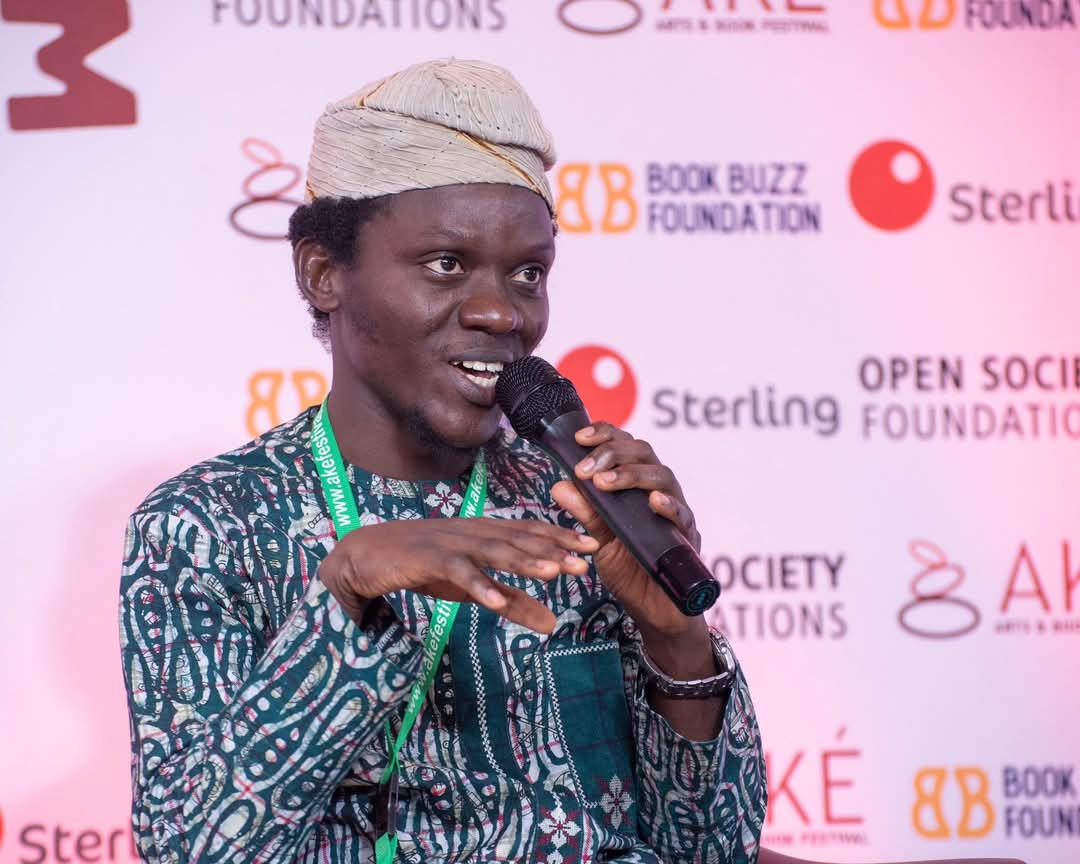
Taofeek Ayeyemi, fondly called Aswagaawy, is a Nigerian lawyer, writer and author of the haiku & senryu chapbook Across the Full Moon (Mamba Africa Press, Ghana 2021) and a haibun chapbook Dust and Rust (Buttonhook Press, California 2022). A BotN and Pushcart Prize Nominee, his haiku and haibun have appeared in The Mamba, Seashores, the QuillS, Akitsu Quarterly, Modern Haiku, Haibun Today, Frogpond, and elsewhere. He won Honorable Mention Prizes in the 2019 Morioka International Haiku Contest, 2020 Fujisan Taisho Tanka Contest, and the 2021 ITO EN Oi Ocha Shinhaiku Contest. He also won the Outstanding Haiku Prize in the 2019 Soka Matsubara International Haiku Contest and a 2020 Haiku Moment Award in the Autumn Moon Haiku Journal. His haibun “Banga” won the 2021 Loft Books International Flash Fiction Contest. He is a member of the Africa Haiku Network, and supporting editor at The Mamba and Chief Editor of the QuillS. In 2022, he served as a judge in the San Francisco International Haibun Contest, organized by the Haiku Poets of Northern California (HPNC); and had served as Contributing Book Reviewer for Frogpond, with Michael Ketcheck and Tom Sacramona. He shares his thoughts and works on Twitter as @Aswagaawy.
Ibrahim for O:JA&L: To begin, could you share your journey into literature? When and how did you first encounter haiku and haibun poetry? Do you also write other forms of poetry?
Taofeek Ayeyemi: I needed to pass Literature in my O-level examination as a requirement to study Law, but I failed it for four years, between 2006 and 2010, before I eventually had a ‘B’ in the subject. That struggle with Literature sparked my admiration for wordplay and the brilliant use of language. I would string words into rhymes and figurative lines to pass messages. It was all child’s play until 2015, when a colleague in the university pointed out that what I was doing was actually a big deal in the literary space. That nudge made me take poetry more seriously. I started borrowing literature textbooks from the English department and reading resources online.
It was on this journey that I encountered haiku as a three-line 5-7-5 poem, sometime in 2017, among other metrical forms. I fell in love with haiku and began writing it a lot. Oni Tomiwa noticed my passion and introduced me to Barnabas Adeleke Sensei, who taught me the true haiku aesthetics and later introduced me to haibun. I deepened my understanding of haibun with guidance from Rich Youmans. Beyond haiku and haibun, I also write mainstream poetry and experiment with various styles.
Ibrahim for O:JA&L: You write under the pen name Aswagaawy. What is the significance behind this name?
Taofeek Ayeyemi: Well, it was just one of those funny ways people get named. I grew up in a traditional Muslim setting in Southwest Nigeria. During my O-level struggle years, I was living with my Ustaz. Unlike the typical way Alfas—what Muslim clerics are often called in the region—would dress, I preferred T-shirts, and my native outfits were often dress-to-match with a bit of flair. One of my colleagues, noticing this, started calling me “Aswagaawy”—a playful blend of English and Arabic, meaning “the one with swag.” The name stuck, and I’ve been fondly called that ever since.
Ibrahim for O:JA&L: You are the author of several poetry collections including Across the Full Moon, Tongueless Secrets, Dust & Rust. Can you share more about the themes and evolution across these works? Do you have more poetry collections you intend to share with us?
Taofeek Ayeyemi: No matter the variety of themes or subject matter, every work of art is about witness, experience, confession, and reflection. My works are no different, though each leans into specific focuses.
Across the Full Moon is a book of haiku and senryu, with events set in the night. From silence to sound, serenity to struggle, the work presents both the minutest of details: longer night . . ./ the crackles of the wall clock/ and cockroaches; and the more pronounced, as in: Hunter’s Moon . . ./ a stray cat and the pigeon/ share a plate. The titular haiku reads: folktales . . ./ a swarm of fruit bats flies/ across the full moon, reminding us of night practices in African settings.
Dust & Rust is a collection of haibun where I share my growing up, and coming of age. While it explores the struggles that shaped my adolescent and teenage life, it also celebrates familial love and the values inherited from parents. There are confessions here — of love lost and won, of the thoughts that travel our minds in the heat of survival. In the titular haibun, I write: “Raised near thickets and forests, we were custodians of chirps, hisses,
tweets and buzzes. We also were artists, experts at decorating bad days with iridescent smiles; days our hunts escaped with our baits, with our hooks, with our only traps, with our hopes of next supper. We were mathematicians: we solved hunger with sleep, knit our tendons with gulps of water and seeds of ọ̀sunsùn plucked at the riverbank.”
Tongueless Secrets is a book of wisdom scraped from the sages’ minds. It begins with a poem titled Genesis and ends with Revelation, attempting to reflect the teachings of biblical wise men — from David to Solomon, from Joseph to John. It is not a religious work, but a reflection on life, death, and everything in between — particularly the matters of fate and faith, belief and relief. It’s humbling to know this collection has inspired other writers. Carmen Calatayud, for instance, wrote her poem First Generation Daughter at the Shore after reading my poem What I See in My Night Walk. Her poem now appears in her book This Tangled Body, whose epilogue features a line from Tongueless Secrets: I put a butterfly on my tongue/ a music serenading the night/ into stars, turning darkness/ into a harvest of melody.
I have other works in the pot: Ọ̀rọ̀ n Bọ̀, Bayelsa Taught Me How to Leave, and my full-length collection Aubade at Night or Serenade in the Morning. This book addresses the struggles of Nigerians — both in their private lives and as citizens — touching on governmental ineptitude, systemic corruption, insurgency, police brutality, and the poor conditions of living. I’ve also co-authored collections such as Numero Uno, Ladayna Mazeed, and Al-Khabith.
Ibrahim for O:JA&L: As someone who bridges both the legal and literary worlds, how do these two professions complement or challenge each other in your life?
Taofeek Ayeyemi: From time immemorial, that is, since the inception of the legal profession, literature has been a necessary foundation for it. In The Discipline of Law, the semigod of Law, Lord Denning, recalls how he had to draw on his Literature in English background to tackle some legal issues. He wrote: “…when I was called to the Bar, I had to become proficient with words. I did it by drawing on my reserves of English literature. These I had acquired at the Elizabethan Grammar School to which I went daily. I had read much of Shakespeare and many of our poets and novelists whilst still at school.”
In other words, both disciplines complement each other beautifully. I earlier mentioned that I had to pass Literature-in-English in my O-level exams to be admitted to study Law. But it’s one thing to pass the subject; it’s another to live as a literary being, pursuing a career in the field. Thankfully, of all the things you may not be able to do while in full legal practice, being a writer is not one of them. That’s why Sir Tade Ipadeola, author of The Sahara Testaments—which won the 2013 NLNG Prize for Literature—can be both a practicing lawyer and an active poet. Meanwhile, the likes of Funke Akindele, Femi Adebayo, or Folarin Falana (Falz) may not be able to practice the legal profession and still actively pursue acting or music careers.
So, in terms of complementarity, it’s been smooth for me. The gift of word usage has certainly shaped my legal writing. I recall my former principal at a firm in Port Harcourt once told me: “How will a judge read this address and not be persuaded to agree with you?” And indeed, the case went in our favour.
Now, as for the challenge: it’s really about time. Both callings require attention and practice. Each has had its fair share of being set aside at some point in time or another. Recently, it’s my literary life taking the punches, because the legal profession is, of course, my day job—the one that puts food on the table and deals directly with people’s lives. So, it must take priority.
Ibrahim for O:JA&L: Haiku and haibun are traditionally Japanese forms. How do you infuse your African roots and identity into these styles?
Taofeek Ayeyemi: Well, haiku is a seasonal poem, and haibun is a diary-style narration imbued with descriptive grace. I haven’t been physically outside Africa, so I simply share my lived experiences through my writings—anchored in my history and heritage, as I did with Dust and Rust. For haiku, I employ African kigo (seasonal references), thereby setting the tone for African roots and identity—what the late Adjei Agyei-Baah aptly restyled as Afriku. And why not?
In the Japanese world, the seasons are Spring, Summer, Autumn (or Fall), and Winter. In most parts of Africa, however, we have the Wet (Rainy) season and the Dry season. Although—let me take this moment to advance my argument—I believe the West African region, particularly Nigeria, warrants a tripartite seasonal division: Rain, Dry, and Harmattan. Classifying harmattan under the dry season feels inadequate. Harmattan carries both the chill of rain and the dryness of heat. It is cold in the mornings and at night, yet dry and dusty during the day. “Dry” does not fully capture the complexity of the harmattan. To break it down, the rainy season stretches from late April to mid-October. From then, harmattan begins to surface, peaking in December and lasting through early February. What follows, until April, is the dry season proper.
Bringing it back to the craft and aesthetics: when you see dust, dry leaves, agbalumọ, or cracked lips in a haiku, these should evoke harmattan. Take, for example:
dry air . . .
fire flakes from the farm
ascending the sun
(Luca’s Lily Pad, Issue 18, 2019)
or
New Year balloons —
two kids running after
the soap bubbles
(Asahi Shimbun, 7th January 2022)
Christmas and New Year, of course, fall squarely within the harmattan. Likewise, when you encounter petrichor, first rain, flooded roads, blossoms, or fireflies, you’re likely in the rainy season. As in the verses below:
neighbours
rushing to their clothes . . .
sudden rain
(Frogpond, Vol. 42.2, Spring 2019)
after storm . . .
replacing the hands
of a scarecrow
(Serow, Vol. 4, Spring 2021)
Then comes the dry season, marked by sweat, hotter days, starry nights, and cashew fruits. Consider the following:
cashews . . .
the juice rolls down
my elbow
(Hedgerow, #130, 2020)
sultry noon . . .
weaverbirds scattering
the pond’s surface
(Akitsu Quarterly, Spring 2020)
All the haiku shared above are mine, and they are some of the ways I infuse African condiments into the Japanese forms—remixing haiku with the pulse and palette of my root and identity.
Ibrahim for O:JA&L: You have also written in other forms beyond haiku. Could you share more about the broader range of your poetic work?
Taofeek Ayeyemi: I started with mainstream poetry before discovering haiku, and understanding it as a vast discipline of its own. Unlike other metrical forms like sonnet, otava rima, limerick, duplex, ghazal, abecedarius; haiku is rooted in the tradition and lifestyle of the Japanese. And that’s why it caught my interest. But I still write chiefly the mainstream poetry, majorly the free verse. Other Japanese forms I write include Tanka (from which haiku itself have evolved, then talk of hokku, renga, renku) and senryu.
Ibrahim for O:JA&L: As a Nigerian writer, how do you think African poets are redefining global perceptions of haiku and short-form poetry?
Taofeek Ayeyemi: African poets are drawing the boundaries of haiku through active participation, infusing it with local imagery, indigenous idioms and cultural parables and aphorisms. In furtherance, personally, I’ve had my haiku and haibun published in journals that hadn’t previously featured these forms—The Rush, Konya ShamsRumi and The Kalahari Review for example. My haibun “Banga” went on to win the Loft Books Flash Fiction Prize in 2021. Oni Tomiwa, a Nigerian haijin, based his final-year project on haiku, titling it “Style and Form in Selected Afriku Poems.”
Across the continent, and especially in Nigeria, poets are gaining international recognition through winning haiku competitions. Writers like Anthony Itopa Obaro, Barnabas Adeleke, Gabriel Awuah Mainoo—and yourself, Ibrahim Nureni—have all earned notable acclaim, and congratulations again on your recent win. Even structurally, African poets are reshaping the space with platforms like the QuillS, which I founded (now on hiatus), and The Mamba, co-founded by Adjei Agyei-Baah and Emmanuel Kalusian. These journals have helped elevate our voices and reframe how haiku is perceived, not only as a nature poem but seasonal poem; not just restrictive or limiting but disciplinary; and not as a borrowed form, but as one renewed in African soil.
Ibrahim for O:JA&L: In your haiku collection Across the Full Moon, you translated each poem from English into Yorùbá. What inspired this bilingual approach? How does the Yorùbá language, and its cultural philosophy, shape your poetry?
Taofeek Ayeyemi: People often describe my poems as bearing the voice of sages—deeply traditional, and layered with what a poet has called “cultural relativistic tendencies.” That’s largely because I think in my mother tongue. The thoughts begin in Yorùbá and are then reproduced in English. Yorùbá, to me, is not merely a language, it is a nation, complete with its own literature, philosophy, and science. So even when my poetry appears in English, its soul is unmistakably Yorùbá.
For Across the Full Moon, I chose a bilingual approach because I wanted the poems to be accessible to those who read Yorùbá but may not be fluent in English. It’s also a subtle form of language preservation—inviting readers who understand both languages to rediscover Yorùbá expressions they may have lost touch with. It’s worth noting that the Yorùbá translations were rendered by Oni Tomiwa, not by me directly. I deliberately wanted an independent voice—someone equally versed in haiku—to interpret the poems for Yorùbá readers.
Ibrahim for O:JA&L: Who are some poets, classical or contemporary, who have inspired your journey?
Taofeek Ayeyemi: Rumi comes to mind, almost unthinkably, not because I’m a Sufi, but because his poetic style have influenced my voice in a profound way. Between 2017 and 2018, I devoted myself to reading and mastering his works, and I believe that’s where the roots of my reflective and accessible style took deeper hold. Aside from the cultural soul people say of my poems, they have been said to be easily accessible yet having depth. Some readers have called them ‘prosaic yet aching and wistful,’ and ‘steeped in the steeze of traditional verse.’ A poet said my poems are ‘simplistic yet explosive.’ And I owe much of that to my immersion in Rumi’s timeless works. While I’ve also read Shakespeare, his influence on my craft isn’t as pronounced.
Among contemporary voices, Tade Ipadeola has been a strong influence—his poem ‘Songbird’ opened a new way of seeing for me. Niyi Osundare, a living legend, continues to inspire with his consistency and cultural rootedness. In my early days, I studied the works of Adedayo Agarau and Romeo Oriogun, both of whom expanded my imagination. Later, I found resonance in the poetry of Rasaq Malik Gbolahan, and more recently, in the stylistic brilliance of Hussain Ahmed.
In haiku, I find myself returning often to the works of Barnabas Adeleke, Adjei Agyei-Baah, Elaina Andrei, and Fay Aoyagi. Their brevity and momentariness carry light and thunder. In haibun, Rich Youmans remains a steady guide. And of course, Matsuo Bashō, whose ‘Oku no Hosomichi’ I don’t get tired of reading again and again. That enduring path of poetic travel he has established for us remains my compass.
Ibrahim for O:JA&L: Lastly, what advice would you give to aspiring poets who want to explore haiku or haibun, particularly those coming from African or non-Western backgrounds?
Taofeek Ayeyemi: I’ve often joked that if I were only allowed to practise just one form of literature for the rest of my life, I would choose haiku and its variations—especially haibun. There’s something deeply elastic and expansive about the poetry form. It gives us the freedom to distill even the most fleeting moment into a lasting impression. Haiku teaches us how to give attention to details, and how to craft metaphors with dualistic or multiplicity of images.
To any African poet interested in exploring haiku or haibun, I say: begin. And stay with it. Its aesthetics may seem rigid at first, but they reveal beauty through discipline. This is not one of those forms where you “learn the rules so you can break them.” No! Haiku requires you to know the rules and honour them, in order to preserve the form’s delicate architecture. It is traditional. It is conservative. And that’s where its quiet power lies.
There’s also a misconception that haiku is simply a “nature poem”, so people feel it restricts them to the olden times. But it is more specifically a seasonal poem. This distinction matters. And the seasons—kigo—are not just backdrops, but most times cues for emotional and spiritual context. Therefore yes, you can write modern, contemporary experiences through haiku as long as your seasonal anchor remains steady. My verses like: “acid rain . . ./ father’s black car/ returned white” or “Election Day . . ./ the callused fingers/ of a farmer” are testaments to this. And with haibun, you have a vast room to show more.
My advice is simple: read haiku, write haiku. Read haibun, write haibun. Let the form speak to you. Eventually, its rhythms and aesthetics will reveal themselves. And for anyone willing to take the journey, I am always glad to help and willing to guide those drawn to this profound path.
About the interviewer:
Ibrahim Nureni is a writer, book reviewer, and critic whose haiku have been published in various literary journals, including The Mamba Journal, Acorn, and Heron’s Nest. He has made significant contributions to the literary field through his engagement with the Open Journal of Arts & Letters, Baram House, Wawa Book Review, and others. Currently, he is a 2015 Fellow of Harrison Middleton University’s Humanities in the Ideas program, where he writes reviews and engages in discussions with faculty and students on topics related to natural science, philosophy, literature, and more. Additionally, he is a Fellow of the Bill Anderson Fund. Ibrahim is a member of the Africa Haiku Network.
Images: Courtesy of Taofeek Ayeyemi.
Explore more of Ayeyemi’s work:
Support O:JA&L’s free presses.
OJAL Art Incorporated, publishing since 2017 as OPEN: Journal of Arts & Letters (O:JA&L) and its imprints Buttonhook Press, HOT BUTTON PRESS Contemporary Issues, and HIGH BUTTON PRESS Contemporary Art, supports writers and artists worldwide.
Explore O:JA&L’s Buttonhook Press offerings on Amazon.
Subscribe to the O:JA&L YouTube channel.
Become an O:JA&L Member through Patreon.
Support Pamelyn Casto’s text for writers: Flash Fiction: Alive in the Flicker

