

HAL: Heuristic Algorithmic Library
American Chapbooks: Reconfiguring Literary and Artistic Prestige
CORRESPONDENCE ACROSS LANDSCAPES:
Dialogic Poetics, Ecological Imagination, and Relational Masculinity in Wolf Tree and Agave,
a lyric correspondence between Larry D. Thomas and Clarence J. Wolfshohl
Click HERE to download theis PDF document.
Larry D. Thomas and Clarence J. Wolfshohl’s Wolf Tree and Agave (a correspondence in poetry) (Spartan Press, 2026) stands as a formally innovative and thematically resonant contribution to Texas letters. While Texas poetry has long been shaped by strong individual voices rooted in specific landscapes—voices that often emphasize solitude, regional identity, and the mythos of the lone observer—Thomas and Wolfshohl offer something strikingly different: a sustained poetic correspondence that unfolds across geographical, ecological, and emotional distances. Their work challenges the monologic conventions of Texas poetry by presenting a dialogic, relational, and ecologically bifurcated text that foregrounds friendship, aging, and the shared experience of inhabiting distinct yet interconnected natural worlds. This continuous essay argues that Wolf Tree and Agave is unique within Texas letters for its epistolary structure, its cross‑biome ecological imagination, and its portrayal of male friendship, and that it expands the boundaries of Texas poetry when compared to major collections by Naomi Shihab Nye, B. H. Fairchild, Lucy Griffith, Vassar Miller, Dave Oliphant, and Thomas’s own earlier work, including As If Light Actually Matters (2014).
Texas poetry has historically been dominated by the solitary lyric voice, a tradition shaped by the state’s vast landscapes and cultural narratives of independence. From the borderlands lyricism of Naomi Shihab Nye to the Panhandle realism of B. H. Fairchild, Texas poets often construct a singular perspective rooted in a specific place. This regional grounding has produced a rich body of work, but it has also reinforced a tendency toward monologic expression. Wolf Tree and Agave disrupts this pattern by adopting an epistolary form that foregrounds dialogue, reciprocity, and relationality. The collection’s structure—poems written as letters exchanged between two poets—creates what Mikhail Bakhtin calls a “dialogic imagination,” in which meaning emerges through interaction rather than isolation (Bakhtin 272). This dialogic quality is central to the book’s uniqueness within Texas letters.
The epistolary mode is relatively rare in contemporary poetry and even rarer in Texas literature. Historically, letter‑poems have appeared in works such as Ovid’s Heroides, the correspondence between Robert Creeley and Charles Olson, and the epistolary exchanges of James Wright and Robert Bly. Yet within Texas poetry, the letter as a poetic device has seldom been used to structure an entire collection. Thomas and Wolfshohl’s decision to frame Wolf Tree and Agave as a correspondence allows them to explore themes of memory, landscape, and aging through a relational lens. Each poem responds to the other poet’s imagery, tone, or emotional register, creating a dynamic interplay that resists the solitary lyric stance. This structure also introduces a temporal dimension: the poems unfold as a sequence of exchanges, each shaped by the time between letters, the shifting seasons, and the evolving emotional landscape of the poets’ friendship.
The dialogic form of Wolf Tree and Agave is particularly significant when considered in the context of Texas poetry’s emphasis on individualism. Larry D. Thomas’s earlier collections, such as As If Light Actually Matters (2014), exemplify this tradition. Thomas’s desert poems are marked by stark minimalism, precise imagery, and a solitary voice that contemplates the harsh beauty of the Chihuahuan Desert. His work often evokes what Edward Hirsch describes as “the solitary witness,” a poet who observes the world with a mixture of detachment and intensity (Hirsch 87). In Wolf Tree and Agave, however, Thomas’s voice is transformed by the presence of Wolfshohl’s responses. The desert imagery remains, but it is refracted through the lens of dialogue, softened by the relational context, and enriched by the juxtaposition with Wolfshohl’s woodland landscapes.
Clarence J. Wolfshohl’s contribution to the collection is equally significant. While not as widely recognized within Texas letters as Thomas, Wolfshohl has long been an important figure in regional and small‑press literary culture. His Mid‑Missouri woodland poetics provide a counterpoint to Thomas’s desert minimalism, creating a cross‑biome dialogue that expands the ecological imagination of the collection. Wolfshohl’s poems evoke the dense forests, creeks, and seasonal rhythms of the Midwest, offering a landscape of abundance and cyclical renewal that contrasts with the desert’s austerity. This juxtaposition creates what ecocritic Lawrence Buell calls a “dialogic environmental imagination,” in which multiple ecosystems interact to produce a richer understanding of place (Buell 7).
The ecological duality of Wolf Tree and Agave is one of its most distinctive features. Texas poetry often centers a single landscape: the borderlands in Nye’s Fuel, the Hill Country in Lucy Griffith’s Sounding the Depths, the Panhandle in Fairchild’s The Art of the Lathe, or the Gulf Coast in Thomas’s earlier work. By contrast, Thomas and Wolfshohl construct a poetic space that spans two distinct ecological regions. This cross‑biome structure challenges the assumption that Texas poetry must be rooted in Texas soil. Instead, the collection suggests that Texas identity can be shaped through dialogue with other landscapes, other ecosystems, and other ways of inhabiting the natural world. The correspondence format allows the poets to explore the resonances and dissonances between their environments, creating a layered ecological narrative that is rare in Texas letters.
The thematic richness of Wolf Tree and Agave extends beyond its ecological imagination. The collection also offers a nuanced portrayal of male friendship, a theme that is underrepresented in Texas poetry. Texas literature has often valorized rugged individualism and stoic masculinity, traits visible in the works of Larry McMurtry, Cormac McCarthy, and even in some of Thomas’s earlier poems. In contrast, Thomas and Wolfshohl foreground vulnerability, affection, and emotional reciprocity. Their poems share memories of fathers, childhood landscapes, aging bodies, and the slow erosion of time. This emotional transparency challenges the mythos of the solitary Texas poet and offers a new model of relational masculinity within the state’s literary tradition.
Masculinity studies provide a useful framework for understanding the significance of this portrayal. Scholars such as R. W. Connell and Michael Kimmel have argued that traditional masculinity often suppresses emotional expression and discourages intimate male friendships. In this context, Wolf Tree and Agave can be seen as a counter‑narrative that embraces vulnerability and relationality. The poets’ willingness to share their fears, regrets, and hopes with one another—and to do so publicly through poetry—represents a departure from the stoic masculinity often associated with Texas literature. This departure is particularly striking given Thomas’s stature as a former Texas Poet Laureate and a member of the Texas Institute of Letters. His participation in a project that foregrounds emotional intimacy signals a shift in the cultural landscape of Texas poetry.
The collection’s exploration of aging and mortality further deepens its emotional resonance. The correspondence format intensifies these themes by allowing the poets to reflect on their own aging processes in dialogue with one another. Each poet’s recollection triggers the other’s, creating a braided narrative of memory and loss. Thomas’s desert landscapes often function as metaphors for endurance and erosion, while Wolfshohl’s woodland imagery evokes cycles of decay and renewal. Together, they construct what Hirsch calls a “shared elegiac consciousness,” a collective meditation on the passage of time (Hirsch 112). This shared elegy distinguishes Wolf Tree and Agave from other Texas collections that explore aging and loss, such as Vassar Miller’s If I Had Wheels or Love and Dave Oliphant’s Maria’s Poems. While these works offer powerful reflections on mortality, they do so from a solitary perspective. Thomas and Wolfshohl, by contrast, frame aging as a relational experience, one that is shaped by friendship and mutual support.
The evolution of Thomas’s poetic voice in Wolf Tree and Agave is particularly noteworthy. In As If Light Actually Matters (2014), Thomas’s desert minimalism is marked by a sense of isolation and introspection. His poems often focus on the stark beauty of the natural world, using precise imagery to evoke the harshness and resilience of desert life. In the correspondence with Wolfshohl, however, Thomas’s voice becomes more expansive, more reflective, and more relational. The presence of Wolfshohl’s responses encourages Thomas to explore new emotional and thematic territory, including vulnerability, nostalgia, and the complexities of friendship. This evolution demonstrates the transformative power of dialogue and highlights the significance of the epistolary form in shaping the collection’s themes.
Wolfshohl’s contribution to the collection also deserves attention. His woodland poetics provide a counterbalance to Thomas’s desert minimalism, creating a dynamic interplay between scarcity and abundance, erosion and renewal. Wolfshohl’s poems often evoke the sensory richness of the forest—the sound of leaves, the smell of earth, the play of light through branches. This sensory abundance contrasts with the stark imagery of Thomas’s desert poems, creating a tension that enriches the collection’s ecological imagination. Wolfshohl’s presence also expands the geographical scope of Texas poetry, suggesting that Texas identity can be shaped through dialogue with other regions and ecosystems.
When compared to other major works in Texas poetry, Wolf Tree and Agave stands apart in several key ways. Naomi Shihab Nye’s Fuel emphasizes cultural hybridity and the permeability of borders, but it remains rooted in the borderlands. B. H. Fairchild’s The Art of the Lathe constructs a unified working‑class identity grounded in the Panhandle. Lucy Griffith’s Sounding the Depths offers a single‑voice ecological meditation rooted in the Hill Country. Vassar Miller and Dave Oliphant explore memory and loss through solitary reflection. Thomas’s earlier works, including As If Light Actually Matters, exemplify desert minimalism and the solitary lyric voice. In contrast, Wolf Tree and Agave embraces dialogic multiplicity, cross‑biome ecology, and relational masculinity. It expands the thematic and formal possibilities of Texas poetry by foregrounding dialogue, reciprocity, and emotional transparency.
The significance of Wolf Tree and Agave extends beyond its formal and thematic innovations. The collection also represents a shift in the cultural landscape of Texas poetry. By embracing the epistolary form, Thomas and Wolfshohl challenge the assumption that Texas poetry must be rooted in a single landscape or a solitary voice. Their work suggests that Texas identity can be shaped through dialogue with other regions, other ecosystems, and other ways of inhabiting the natural world. This relational approach to identity is particularly important in an era of increasing ecological awareness and cultural interconnectedness. Wolf Tree and Agave offers a model of Texas poetry that is expansive, inclusive, and attuned to the complexities of contemporary life.
In conclusion, Wolf Tree and Agave is a landmark contribution to Texas letters. Its epistolary structure challenges the monologic conventions of Texas poetry; its cross‑regional ecological imagination expands the geographical boundaries of the tradition; and its portrayal of male friendship introduces a rare emotional transparency. By situating desert and woodland, memory and mortality, solitude and companionship in dialogue, Thomas and Wolfshohl offer a new model for Texas poetry—one rooted not in individualism but in relationality. Their work broadens the thematic and formal possibilities of Texas literature and establishes Wolf Tree and Agave as a unique and valuable addition to the state’s poetic canon.
ABOUT LARRY D. THOMAS:
Larry D. Thomas is an American poet whose work is deeply rooted in the landscapes and histories of the American West and Southwest. Born in Texas, he served for decades in social service and adult criminal justice before devoting himself full‑time to poetry. He is the author of numerous poetry collections, beginning with The Lighthouse Keeper (Timberline Press), a letterpress edition that sold out quickly. Appointed Texas Poet Laureate in 2008 by the Texas Legislature, Thomas is also a member of the Texas Institute of Letters. His poetry has earned multiple major literary awards and appears widely in national journals.
ABOUT CLARENCE J. WOLFSHOHL:
Clarence J. Wolfshohl is a poet, publisher, and educator whose life’s work bridges literature and the art of fine printing. He is Professor Emeritus at William Woods University and has been active in the small press for more than five decades. For thirty‑five years, he edited and produced finely crafted letterpress books through Timberline Press, followed by work with El Grito del Lobo Press. His poetry and nonfiction have appeared widely in print and online journals, and his numerous chapbooks and collections are known for their craft and attentiveness to place. Wolfshohl has also served as president of the Missouri chapter of Partners of the Americas supporting international cultural exchange.
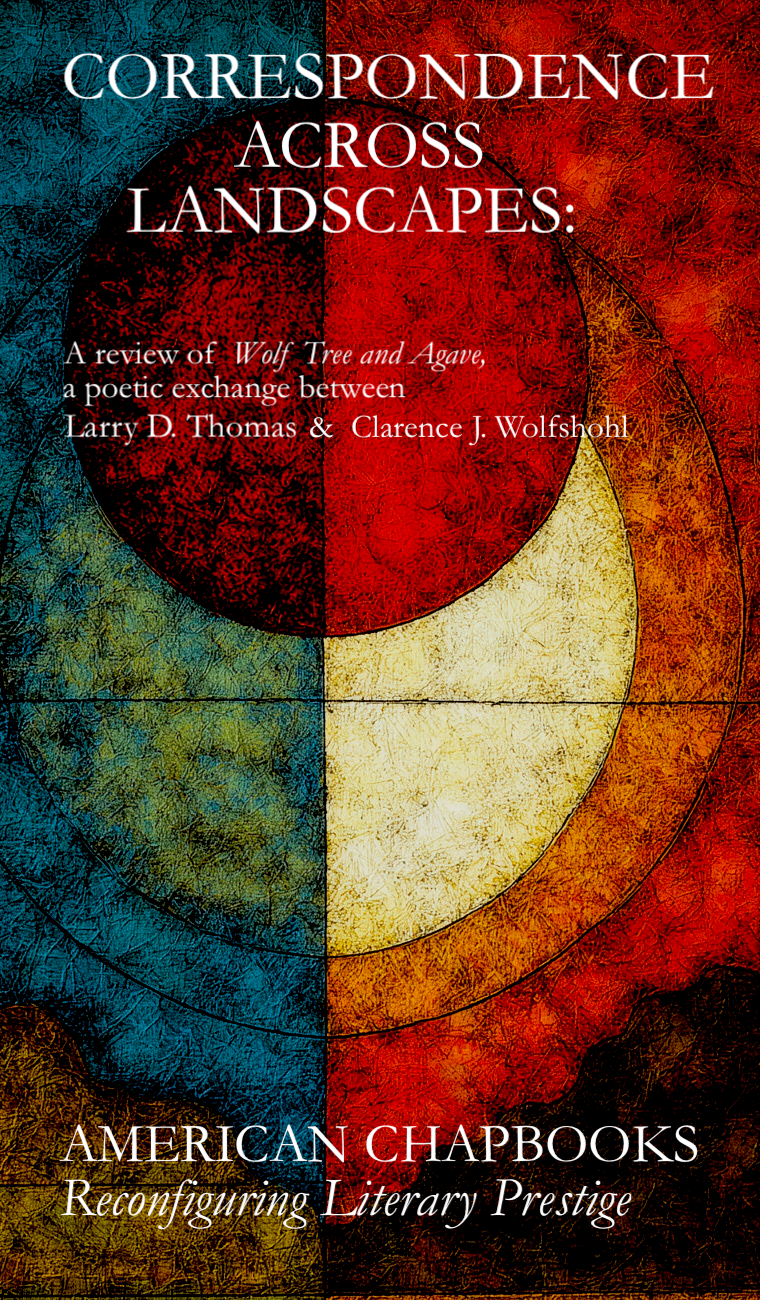
Image: I’m Sorry, Dave #20 (AI-assisted digital image) by O:JA&L staff creative. 2026. Public domain via Midjourney AI.
This project was made possible, in part, through support from
Richard Stimac and his new book BLOOD, WATER, AND STONE
available now from Spartan Press.

OJAL Art Incorporated, publishing since 2017 as OPEN: Journal of Arts & Letters (O:JA&L) and its imprints Buttonhook Press, HOT BUTTON PRESS Contemporary Issues, and HIGH BUTTON PRESS Contemporary Art, supports writers and artists worldwide.
O:JA&L’S BUTTONHOOK PRESS MASTERS SERIES
Click on the titles below to explore or download the free PDF chapbooks in the O:JA&L Masters Series.
The Buttonhook Press Masters Series: Brian Clements on Prose Poetry
With an Interview by Associate Editor Pamelyn Casto
The Buttonhook Press Masters Series: Mark Budman on Flash Discourse
With an Interview by Associate Editor Pamelyn Casto
The Buttonhook Press Masters Series: Ray Gonzalez on Prose Poetry
With an Interview by Associate Editor Pamelyn Casto
The Buttonhook Press Master Series: Michael Martone on Flash Fiction
With an Interview by Associate Editor Pamelyn Casto
The Buttonhook Press Master Series: Roberta Allen on Flash Fiction
With an Interview by Associate Editor Pamelyn Casto
The Buttonhook Press Master Series: Peter Conners on Flash Fiction
With an Interview by Associate Editor Pamelyn Casto
The Buttonhook Press Masters Series: Maxine Chernoff on Prose Poetry
With an Interview by Associate Editor Pamelyn Casto
The Buttonhook Press Masters Series: Pedro Ponce on Flash Fiction
With an Interview by Associate Editor Pamelyn Casto
The Buttonhook Press Masters Series: Tom Hazuka on Flash Fiction
With an interview by Associate Editor Pamelyn Casto
The Buttonhook Press Masters Series: Kent Dixon on Flash Fiction & Nonfiction
With an interview by Associate Editor Pamelyn Casto
MORE TITLES IN PRESS

