

O:JA&L Prose discourse to 10,000 Words: Fiction
Jennifer Celeste
FROM THE MOUNTAIN MEN
Nigua Sugar Mill, 1540s
By the time the sun starts setting over the fields of Nigua, my fingers are dry and grainy from the dirt; my lips are sweet from the sugarcane. I rub my dirty hand over my sweaty forehead and breathe deeply as the sun’s heat finally begins to subside. It will be at least an hour before the cool air breathes fresh life through these haunted grounds, at least an hour before I feel I can breathe again. I bite through a chunk of sugarcane and hide the rest in my pocket, careful to hide it beneath the rag I use for washing.
“You’ll have mites living in your teeth by the time you get through that stalk. Be careful, Anagui,” Evelina tells me in her harsh, billowing Spanish. I oblige, spitting the sugarcane’s fibers out onto the ground and using my foot to cover them with dirt. “Unless Tostado comes by from the notary and hangs you for stealing.”
“It’s just a nibble to get me through. Everyone does it,” I mumble, the words struggling to pass through my dry tongue, my chapped lips. I go back to chopping down the harvest of sugar cane, my body bent like a snapped twig as I labor across the plantation.
I toss the sugarcane, one after the other, on a pile behind me, which is then bundled up and loaded into wagons by the Second-Gang workers. My muscles ache from the weight of the billhook, from the force of my swing, from the stubborn resistance of the long, green stalks as I struggle to break them free of their fibrous roots. Mosquitos poke through my skin, and tiny, itchy bumps dot my arms, my legs and shoulders. I am being eaten alive by the sugar, eaten alive by the sun. Sweet and swollen and steaming hot, almost set for serving.
Fifty slaves, me included, dot the fields of the De Tostado Plantation on the Boca De Nigua Sugar Mill. I can imagine that high up in the air, the birds must confuse us for locusts moving slowly from one square-shaped plot to the next, slowly but surely picking at the stalks of sugar until there is nothing left to take. Around us, a field of stalks stretches out for acres, framed by gates and large stone buildings: in the most isolated section of the plantation are the slave’s sleeping quarters, the outhouse and communal showers, and what we call the love house; in the nicer parts are the offices for our maestros de azucar, our overseers, and far away, past the trees, the master’s home. Here, on the working grounds, are the storage rooms, the boiling house–all of them hot and hard and menacing, a casket of stone over a lake of dirt and fire. From a few rows over, whipping sounds travel by wind, followed by the grunts of slaves–grunts squeezed through clenched teeth, dissolving into the hot air. Always heard, never spoken of.
When the sun sets, our workday comes to a halt with the sound of three skyward bullets. Four armed men on horses come and lead us to the big stone bunker, where we will finally wash our faces and drink and eat. Even after the setting of the sun, a blanket of fire warms my back and arms, and what little water I have in my body clings to my body in the form of sweat; if it were not for the sugarcane, all I would taste is salt.
I stand in line with the rest of the slaves at the end of our workday and look around at the men and women around me, all of us marching in one straight line toward our bunker with aching bellies and backs, each of us swallowing sweet mounds of sorrow. Eveline pinches my elbow, beckoning me forward. “Huye, Anagui.” I speed up to maintain the line’s quick pace.
The men here often die before they’re thirty, and those who live live miserably. Some have escaped, and others have tried to. We are led through the corridor and past the tunnel, where I instinctively grab onto the hem of Evelina’s gown, where she pushes me forward through the darkness. Next time, she will get to close her eyes, and next time I will have to look and see the heads of those that tried and failed to run away mounted on long, wooden poles, their eyes constantly staring, serving as a reminder that, if there is a chance at escape, the price is far too costly.
I chew on the leftover fibers in my mouth, the sweetness gone bitter as my eyes stare into the portrait of darkness behind my closed eyes. Today, I have the privilege of hiding, of pretending the world I live in is not the world I live in, but tomorrow, I will see the eyes of the runaways once more; I will taste the salt of their tears.
 OF THE FIFTY SLAVES on the De Tostado sugarcane plantation, eighteen of us are women. We lay on our shelflike bunks in a cold brick building, lining the walls like produce. The women sleep on one side of the long, rectangular room, and the men sleep on the other, separated by nothing but a few feet of stony, dirt-covered floors and darkness. At night, our bodies perfume the air with musk and heat, and we sleep in the soup of our tragedy all night long, the disease, the infected whipping scars, the dirt that clings to our bodies like chinchas, and we, the meat for stewing.
It is hard to get to know everyone, partially because Tostado has been limiting socialization since the first set of uprisings, and also because we have many different mother tongues. But, at least until they have learned enough Spanish, I recognize all of the men by face, noting the sweat on their brows, the way their bodies seem to sway as the heat from the sun rises back into the air—a heat so strong, I can feel the dirt baking into my skin, can see figures lingering in the shadows far off in the distance. Evelina calls them Mountain Men; I call them ghosts, because no one survives beyond the plantation.
“What are you thinking, Anagui?” Evelina asks me. I stir in my bunk below her. Most of our day is spent on the field, but when we are blessed with the luxury of rest, we eat; sometimes we wash; always, we sleep, and some make love, far off in the fields. This night, I wrap my finger around the hem of my dress, peering off into the darkness, the sound of snores rising into the air like unanswered prayers.
“Nothing, Eva,” I say with a sigh. “I am just tired.”
I do not tell her that I am cataloguing the inventory of slaves in my mind, myself included, attempting to find a pattern that may bring me a sense of enlightenment, a sudden love of work or religion that will allow me to keep going. How much are we worth to them?
It is a game I play sometimes, estimating our value. Three of the women are quite old; they are Third Gang slaves, which means that after over twenty years of excruciating work on De Tostado’s lands, they are rewarded with simple work; they weed the fields and feed the animals, catching cane rats and roasting them in banana leaves. Three other women, Second Gang women, are barren, one of them because she is cursed and the other two because they have been injured. Four are children, and the rest, me and Evelina included, are in the First Gang, which means we are young, and strong, and do a little bit of everything. But this doing of everything takes great effort–an effort I doubt I can sustain for twenty years.
“The men have been speaking of leaving again,” Evelina whispers, dangling her leg over the edge of her bunk. She sleeps directly above me; always at night her voice drips down like remnants of rain from a hurricane. “Four of them. They’ve been in contact with the cimarrones.”
“How?” I ask, already visualizing my head on a stick, picturing the others shutting their eyes as they walk past me to avoid the look of agony on my face. I squeeze my eyes shut, and although it forces back the visions, it doesn’t do much to quiet the screams of captured slaves in my mind. Stirring in my bunk, I press my hands over my ears. And there it is again–the taste of salt, all from tears that pour down my cheeks at the thought of my sentencing.
The girl beside me presses her elbow to my back, bidding me to still. I settle the silent dispute by resting on my back, my hands crossed at my chest like a corpse.
“How should I know? They have a settlement in the Baoruco Mountains,” Evelina says then, her whisper breaking through the typical screechings and hissings of the night.
“That’s almost a hundred miles from here,” I say.
“Yes, but the cimarrones know the land better than anyone. The Spanish are afraid of them, Ana–”
“Afraid of what? A bunch of runaways living in the mountains like savages? The Spanish aren’t afraid of anyone. We’re the ones who should be afraid,” I hiss. A flurry of hushes silences me. Another jab of the elbow.
“That’s not true, Ana. And you know it. The Spaniards won’t even leave the plantations without armies of twenty men. They’re afraid to leave their own farms,” Evelina says with a quiet urgency that could convince anyone to revolt if they had enough courage.
“You speak as if you are not a Spaniard,” I tell her, though I do not understand why this makes me angry. For a long moment, Evelina looks at me through the darkness. I do not need to see her to feel her eyes on me, narrowed in disgust. She breathes deeply through her nose; I can picture the resignation mounted on her face, her lips stiff with disappointment.
But still, she tells me: “Can’t you see, Ana? It’s time.” She reaches down and places her rough, calloused hand in mine, her jagged fingernails forever the color of coal and blood, and she squeezes my hand, clutching it as if for breath, as if she cannot live without it.
“Time for who?” I finally say, releasing my hand from her grasp and returning it to my chest. “For you? For me? How will we possibly make it through 100 miles of occupied land? You have spent too much time in the sun,” I turn away from Evelina’s voice, toward the other women sleeping like spoons set on their side, my back still aching from the day’s harvest.
For years, Evelina has been like a sister to me. We traveled together from the Casa Verde Plantation in Santo Domingo to Nigua at the ages of nine and ten and have stuck together ever since. She is the closest thing I have to a big sister.
But our mothers were constantly at odds, my mother having had been the last-surviving Taino on the Plantatin, Evelina’s mom having had been shipped over from the Kingdom of Kongo when the Tainos started dying off and, consequently, the supply of La Espanola’s original slaves went low. On the day we were separated from from our mothers, they put aside their feud and told us that if we could help it, we had to stick together. “In a way, you are family,” my mother had said, cupping my face with her thin, gouted hands. “Do what you must to stay together.” And to this day, we have, but Evelina has forgotten the promise we made to our mothers, the promise to come back and find them.
But how will we find them, running through those mountains like criminals?
“You have to have a little bit of faith, Ana,” Evelina tells me. “There are thousands of us living as free people in the mountains, and you want to stay here and hack sugarcane until you drop dead like a stone!”
“If you want your head to end up on a stick, go,” I say. “ They’re chopping runaway slaves up like chickens and hanging them on trees!—nailing their fingernails on doorposts!—Whipping them raw! And you want to risk that to do what? To live in the mountains like cattle?”
“We already live like cattle,” she says. “And I’d rather die a runaway than live as a slave!”
“Then you’ll die a runaway!” I hiss, lifting my head to speak. The women around me groan and murmur in anger. I return to my spoonlike position, resting my head on my arms for support. I hear Evelina shake her head, then she disappears behind her bunk and sinks into silence.
This is how she remains for a long time before speaking again. “This is happening whether you like it or not. You’ll hear the signal at the end of this season, right after the rooster’s third crow. You’ll know which way to take then. Go, or don’t go. You can rot here like a sugar stalk if you want, but I’m leaving. And if you don’t come, you’d better find someone else to hold onto if it’s my head mounted on a pole.”
I look up to say something, the moonlight streaming over the area Evelina just deserted, but by the time I do, her head is hidden behind her bunk again, and the room around me has quieted down to such a stillness that all I can account for is the collective breathing of the other women in the room as they struggle to fall asleep again, their eyes, like mine, staring at nothing, at everything. I wonder what they should find in the darkness, and, with a sigh of resignation, I lay on my back and rest my hands on my chest.
THE NEWS OF THE CITY’S FORTIFICATION spreads quickly among the freemen, news that freshly-imported slaves are to build a muralla for Santo Domingo stretching from the Ozama River to the Puerta del Conde. The slaves are the last to know.
When I finally do hear the news of the city’s fortification–a long awaited manuever against the French and English corsairs, against the Cimarrones, against the slaves with “unholy ideas”–ideas of freedom and war and fires that burn–I am told that runaway slaves are the least of the Spanish’s troubles, that the corsairs are raiding ships and burning plantations, that the Spanish are not strong enough to go out and look for us.
Outside these walls, in the city, the Spaniards live in constant fear of being attacked, their wives in constant fear of being raped–as if they’d ever know the feeling. They huddle together like ants as they roam the streets they stole from us, armed from their hats to their britches like common thieves. Word has spread around the plantation that three sugar mills have been raided in the past two months, that De Tostado’s may be next. This news electrifies the De Tostado slaves’ spirits, shakes them as if out of a deep slumber. Even Third Gangers start to work with less reserve, their steps energized and youthful, in the same way one does not think of rationing water when one know for certain rain will come. But I do not, cannot celebrate–alas, am I not also a Spaniard?
“You are nothing but a slave,” Evelina tells me mid-swing, her fingers coated with dirt as her billow strikes the sugarcane stalk at her feet. She holds up a stalk, high in the air. “You are only worth what you can harvest. You are worth no more than this stalk.”
“Put that down! You’ll get us whipped,” I say. I get back to work, chopping down stalks and tossing them in a wagon manned by a forty-year old man. He stands in the sun, his skin as dark as fresh soil, his body devastated by his fifteen years in the First Gang. He will, as I will, live here and die here, traveling from one field to the next, sewing much and reaping very little. I stare at him, wondering how he felt at my age, wondering if he is thinking now what I will be thinking then, if he has made peace with his life, with the inevitability of his inconsequential death. If I ever will.
Then I think back to my mother, how like that man, she too resigned as she grew older, the fire in her dimming day by day until, all at once, it was extinguished. She was the last generation of pureblood Tainos born on this island, and to this day, I’m certain she still calls it Quisqueya. I remember the stories she would tell about the day she took me and my brother Nnamdi out into the field, her eyes full of tears, a blade in her hand as she considered returning us to Yucaho, or to Jesus, or to the sky.
She couldn’t do it, though. Sometimes I wish she had. So many Gods I have known, and yet, here I remain, though I do not know which one spared me.
My mother was a hard woman; hard, but loving, though she rarely expressed that love. I was with her for fifteen years, which is more than most slaves can say, and only because of her forced marriage to her master. We have been apart for three, and even though she is less than a day’s walk away, I can always feel the greatness of her absence, hear her voice pleading for them to keep me with her. She may as well be stranded on the moon, a million miles away. And yet, even with her absence, her words have driven stakes in my mind:
“She is not very smart.”
“Did you learn from the birds how to eat corn?”
“If you work slower, you can stay.”
So when I hack the sugarcane with my billhook, I see her hands gripping my own, taking over the peeling or the planting or the skinning. I remember when her callused hands met my bare flesh, burning into my arm or behind like heated wire, like fire ants. As a young child, when I would work in the house, she would frequently make a spectacle of my mistakes, insisting to the masters of Casa Verde that I would not be worth much, that they wouldn’t get more than a few maravedis for me. For years, they listened to her, but when I turned fifteen, when I became a woman, they saw another use for me.
My mother had not anticipated that, slow or not slow, I was still a woman. She had not anticipated that I was never hers to keep, that she was never meant to be mine. She failed to recognize the value of my being was in my womb, not in my mind or even my hands. I suppose you don’t need to be smart, or kind, or useful to be a mother. You don’t need to be anything at all.
WHEN THE ROOSTER SOUNDS and the sun is still low we head straight to the sugar. As always, we are lined up in one long row and diverge where the stone path ends and the soil begins. A guard always meets us at each stop, guiding us to our destination each day as if the journey there were new. But today, the guard stops the First-Gang women, his gun held firmly in his hands. I always hated guns.
The women stand in a single, curved line, facing an empty field. The guard approaches us one by one, staring us each in the eye before speaking. He walks with his chest poked out, his nose lifted high above our lowered heads as he stares down on us with cruel, unblinking eyes. “It has come to my attention that a few of you know information about a possible insurrection in this facility,” he says in his proper Spanish. I notice Evelina beside me, who is staring at her feet, her hands resting stiffly against her body. The rest of the women stare at each other, confusion and fear branded on their faces. “You all know the price of treason. If you have any information, come forward now.”
Whispers echo throughout the group of women. The guard scans the crowd with slits for eyes, his gun slung close to his body. When the whispers die down, he walks past each of us again, his eyes traveling from one face to the next. I am sure he can see right through me. When I catch sight of Evelina again, her hands have come together, and her toes have started digging into the dirt. “No one will come forward?” He asks, and when no one does, he scans our faces like a dog seeking a piece of meat, and lands on Evelina.
The guard grabs her and takes her a few yards over toward a dirt patch in the grass before having her kneel on a stone. He stands over her and points his gun toward her head. Then everyone starts gasping, or screaming, or begging for mercy. I feel as though a rodent has burrowed into my stomach, my whole body set aflame with fear.
“Please!” Evelina shouts, tears carving rivers down her skinny, dirt-caked face. But the guard does not listen; instead he points the barrel of his gun closer to her face, pressing it so hard into her temple I’m afraid it’ll poke right through to the other side. “One of you knows something! Confess, or I shoot! There are two shipments of slaves arriving in a few weeks. Anyone can be replaced!”
For a long time, Evelina fights against his grip, but he clings onto a ball of her hair, violently pushing and pulling her head until she has no choice but to sit still and let him pry the gun into her mouth. She coughs, and shuts her eyes, but does not move. Fear wraps its arms around me, and from beyond, I see it again—a shadow, moving in the distance as if looking at the scene. It stops; it stares; it points to the sky, a long arm stretched upward.
From above, the clouds seem to darken and grey, and a thick silence comes over the crowd, the perfume of our suffering like a fogging the air. I watch as Evelina holds onto her stone necklace, eyes shut tightly. She attempts to pry herself out of his grasp once more, but when he pulls her closer to him, she finally surrenders, saying: “Okay.” But her hands are still shaking; she wrings them together to try and hide her fear. If I didn’t look at her hands, I would think she wasn’t even afraid anymore.
Then I remember our mothers, the promises we made to stick together, regardless of what that would entail. For years, we’d hang our heads low, doing as we were told, remaining silent for the sake of staying alive and staying together. But now, doing that will cost me my only friend, my only chance at happiness. I picture Evelina’s head on a spike, imagine how horrified I’d be at the sight of her dead body, how I would never feel even a second of happiness if she were no longer with me.
I do not even notice I’ve moved until I feel a set of strange hands pulling me back into the crowd. I wriggle free and step forward. One yard, two yards, and soon, I am beside Evelina, facing the guard. “I have something to say.”
Evelina looks up at me, and when our eyes meet, I see she’s been crying. She shakes her head gently, mouthing “no,” and then, without warning, the guard shoves her away, approaching me. His loud steps stamp deep prints into the dirt; I watch as his boots materialize in front of me.
When he reaches me, he commands me to speak. “It is me,” I say. “I have been stealing. Not a lot–I have been chewing on the sugarcane stalks as I work, just to get me through the day. Then I spit them out and cover the fibers with dirt.”
He stares at me for a moment before speaking: “¡A ver!”
We abandon the group, the guard and I, and Evelina remains on the ground, rubbing her head and watching me as I am led away in search of the area where I spit out the sugarcane fibers. It is by the 79th cane-hole, a four-by-six foot rectangle with tiny stalks left over after the harvest. I wipe away the dirt with my bare foot, revealing the chewed-up sugarcane fibers buried half an inch into the ground. The guard bends down and examines the fibers between his pointer and index finger, and after a few seconds of deathly silence, he pulls his whip out from his pocket and launches the thong onto my back. The whip wraps around my small frame and smacks me in the cheek. I cower on the ground covering the raw, bloody skin on my cheek with my hand. The guard towers over me, whip in his hand, and spits on the ground before speaking.
“You like sugar? I’ll give you sugar.”
THE BOILING HOUSE SMELLS LIKE SWEAT AND MOLASSES, and after seven hours chained to the furnace stirring cane juice over one of the many fire pits, my arms feel like they will burst into flames. Periodically, I skim the foam off the top of the batch, and when the Boiler decides that the juice has thickened enough, I pour it into the smaller vat beside my own. This vat is manned by a one-armed Second Gang man who lost his hand to the mill a year ago. According to the maestros, you only need one hand for stirring.
The newly-appointed Boiler, one of the slaves from our bunker, is tall and well-fed, with a shaved head, a strong wide nose, and doelike eyes. His job is to oversee the seven vats of molasses in the boiling house, each vat smaller than the last with thicker and darker sugarcane juice bubbling inside. He circles the furnace room like the long hand of a watch, sticking his head over the vats and waiting for the cane juice to boil. I wonder how tired he must be, walking around this hot room without pause, how strong his legs must be.
“Keep stirring!” he says to no one in particular, as he does a hundred times a day. Then he looks over to a group of Spaniards, dressed from head to toe in fine linens, who stand by a large pile of sugar near the doorway, spooning tiny bits of it into their tea. They converse for a moment, and for that minute, their laughs seem to suffocate the moans of us working the vats, stirring the sugarcane.
When they’ve had their fill, they leave. One man stays behind; the men take turns keeping watch, stepping outside whenever the heat becomes too much to bear. I envy this most of all–their ability to step outside of the fire, watching us as we burn.
Just then, one of the stirrers collapses, his body nearly hitting the ground, but the Boiler holds him up, pats his back and slaps his cheeks gently. The maestro sees this, and snaps at the Boiler to keep working. Without another word, the stirrer and the Boiler get back to work. Then, in an exhausted voice, the Boiler tells the stirrer, “Don’t let that syrup stick to the bottom!”
I count the days until this is over. I was told I am to spend an entire season in the boiling house. If I survive the constant stirring, and the heat, and the flesh-eating mill, I will return to my old post in the field under strict supervision. But many have entered the boiling house only to become trapped inside due to injury or death. Some have even ended their own lives rather than stay chained to the furnace stirring cane juice. My hopes are low this season.
When the day is over and the second shift of slaves takes over the boiling house, my group is unchained and led back to the bunks, where the field workers have been sleeping for roughly thirty minutes. The boiling of sugar requires 24-hour servicing, so we cannot leave until the next set of workers have arrived on the field and in the boiling house. When I reach the bunks, Evelina is sleeping on my spot in the bunk in her failed attempt to save me a spot. Above it, Evenlina’s remains empty. I place my foot on the lower bunk to climb up to Evelina’s spot, and it is then, only then, that I spot him, as if for the very first time, in his spot near the corner wall on the men’s side of the cabin: the Boiler.
He stares back at me as he massages his wrists and ankles. “Estas cansada?” he asks me, his Spanish choppy, yet relaxed.
I nod. “Stirring is going to kill me.”
“You’re doing it wrong,” he says. Then he tells me to stir in the shape of an eight instead of a circle, that it saves time and energy when mixing. I smile, grateful for any advice that will lessen my suffering. I move my thumb in the shape of an eight over the cushion of my hand, feeling the thick calluses freshly forming.
“What is your name?” I ask.
“It’s not important,” he says. “But I go by Ocho.”
I thank him for the advice and climb into my bunk, a dull pain traveling up and down my legs and back. I stare at him one last time, barely seeing his face through the dim moonlight. But his voice is strong, unwavering, as if it has never been touched by the whip or the shackles, as if he has never been touched in a way that he shouldn’t. “I saw what you did for that man,” I say. “It was kind. You remind me of my brother,” I tell him. And he nods.
“We all remind each other of someone we have lost,” he says. “It is how we manage.”
I nod, hoping he knows I understand.
Then I lie down again, tracing the number eight into the air with my finger while wondering how many days it would take for my body to get used to the heat from the furnace, to the weight on my wrists from the chains.
FOR THE NEXT FEW DAYS, I spend thirty minutes each night speaking with Ocho. It started off slowly, a word here and there, but soon, much of our nights are spent talking.
Of course, we can only talk until one of us, or both of us, crumble from exhaustion; some nights, Evelina stays up and waits for me, and the three of us talk until we’ve all fallen asleep; other times Ocho and I collect pebbles near the doorway and stack them in our hard cement bunks to toss at each other when one of us begins dozing off. I soon grow a collection of tiny pebbles that Ocho has tossed at my bunk–smooth black pebbles and rough grey ones, tiny things with holes and spots and what appear to be bruises. I collect them all and make a pillow of them, as if sleeping with them could bring him closer, and I wonder if he does the same with mine.
A week later Ocho switches bunks with one of the other men so he can be closer to me, even though this cost him a quarter pound of yams and a half day’s ration of salted fish. From there, we learn to share; it is my first time freely sharing what little I have with anyone other than Evelina.
“You didn’t have to share your rations with me,” he tells me one night as we chew on leftover yucca.
“You didn’t have to give yours away to sleep closer to me,” I say.
Each night, we spend more and more time together, sometimes foregoing sleep altogether. We sit deep in the shadows, hidden behind a large stone plank meant to separate the men and women’s quarters, and it is here that he tells me of his travels to the island, how cramped the slave ships were, how the women stored seeds and nuts in their hair just to have a morsel or two to eat throughout the day. He tells me of the stench, how his neighboring bunkmate got sick three quarters of the way down and infected an entire row of people. “Most of all, I miss my mother,” he tells me, who was left behind in the great shuffle.
And I tell him of my mother, how she grew up on what used to be Quisqueya and is now Hispanola, how she lost her people as the island lost its identity, how I was a product of this “great shuffle” he speaks of. “My mother told me that, in her childhood, there were no buildings, or ships. There were no white people, or black people…only red. Now everything is divided.”
“Nature was never meant to isolate,” Ocho tells me. “Nature thrives in a state of harmony. It is like music.”
He pauses briefly before reaching for my hands. He places his rough hands over mine and gently begins to tap on the ground, alternating between my right and left hand in a slow, steady beat. “Back in Senegal, my land, we have a drum called a djembe. But it is not just any drum, no–it is a special drum, one whose music is meant to speak things that humans cannot say in words.” He continues to drum softly, slowly increasing his speed. “Think of weddings, and funerals, and the arrival of a king,” he tells me, smiling softly.
“Music for royalty,” I say, visualizing an elaborate wooden drum in place of the cold stone floor.
“Yes,” he says. “It is what I hear when I think of you.” He slows the beat down once again, playing a soft romantic tune that makes my heart smile. When he is over, he kisses my hands, holds them gently in his. We stay still for a moment, our heartbeats connecting. Mine beats so loudly I wonder if he can hear it. Then he taps again, this time even softer, and when the song ends, when the pounding of our hearts have settled once again, he whispers goodnight and walks back to his section of the room, disappearing behind the darkness.
I return to my side of the room, back to Evelina’s spot, where for once she has finally managed to stay in wake for me.
“You seem happy,” she whispers, her voice soft and slow from sleep. “Happiness here is rare, but earned.”
“Sweet dreams, Eva,” I tell her, and I listen to her stir below me before drifting off to sleep.
Then one night, when the entire bunk is asleep, Ocho leads me out of the bunker and into the love house, and it is there that we proclaim our love for each other, that we show each other in the only way we can that our hearts, the only parts of ourselves we can offer, belong together. It is then that I understand why my mother fought to keep me, why she dared to believe I could remain hers. I was all my mother had to show of her life. I was the only reminder of her existence. If I cease to exist, so does she. So too I am with Ocho.
And so, ever exhausted from the lack of sleep and hungry from the day’s meager ration of saltfish, I operate the mill each morning, thinking deeply of Ocho, hoping that my love will fill the place meant for the saltfish, hearing the sound of his drums in place of screams, seeing his hands holding mine in the darkness.
EXACTLY NINE WEEKS INTO MY SENTENCE in the boiling house, despite my greatest efforts to be extremely careful, I have my first big accident. It happens on that day I work the mill, while I feed the sugarcane through the hungry gears. Yes, I have had burns and scrapes and muscle fatigue, but I’ve never felt a pain like this. It doesn’t even happen because I have been thinking about Ocho. It happens because I am cursed.
It is not uncommon for men and woman alike to have accidents in the boiling house. What is uncommon is that they survive. So though I am cursed, I am also lucky. It happens as I am feeding a stalk of sugarcane into the mill. As I work, I watch the sugar disappear behind the gears, its sweet juice streaming out on the other side. There is a satisfying crunch proceeding the sudden rush of sugarwater, a sound like chewing, and I picture myself basking in the sweetness.
It is then that my finger catches the gear, and once your finger is caught, the rest of your body is sure to follow. When the mill bites down on my finger, I instinctively pull my hand away, but the mill keeps trying to push me forward. I scream louder than I’ve ever screamed before, and I scratch at the wall and dig my feet into the ground to try to escape its grasp. I feel nothing at first, but when I see my fingers being fed into the machine, I began to fear that the mill will eat me up entirely. From the other side of the mill, a curtain of blood follows a crunch of bone. I weaken in stance, a spell of dizziness prompting me to give in, to let the mill consume me. In seconds, Ocho runs out of the boiling house, a blade in hand, and in one swift blow chops my arm away from the mill.
He chops just before my elbow and pulls me away from the mill. We collapse onto the ground, and he wraps my hand tightly with a thick rope he wears around his waist. I lay on the ground covering my hand with the cloth, terrified of looking underneath. My body shakes wildly, and as my vision narrows and blurs, a wave of nausea rushes over me.
I am halfway to fainting by the time two of the maestros run outside, giving Ocho one good whip and telling him to get back to work, that they will take care of this from here on out. Ocho huffs before he leaves, standing tall, his chest puffed out in defense, and for a second, I believe he will hit them. “Ocho,” I whisper, and when he stares at me I shake my head. He sighs in submission, and leaves.
I am left with the two maestros, feeling for my missing hand, certain that, if it weren’t for Ocho, this machine would have eaten me alive. I pinch my arm where my hand once was, weeping toward the sun. “That batch is no good,” one of the maestros says about the bloodied batch of freshly crushed sugarcane syrup. “We can’t afford another accident.”
If it were not for the shock, I would have felt a wave of anger filling my body, an anger strong enough to almost burn away the pain. I would say that I cannot, will not let them win. That I will not be another casualty, another life that has been taken by this god forsaken sugar mill. If it were not for the shock, I would spit at the maestros. I would run, right then and there.
But instead of this, I freeze, the only sign of life in remaining the rattling of my body. I hurriedly scan my surroundings in search of Evelina, but instead of her, I see the ghost—the Mountain Men, the demons, the succubi. Whatever they are, they crouch behind a thicket of bushes far in the distance, watching, always watching.
Then I am carried onto a horse, over a sun-scorched field, with a bloodied stump of a hand, certain that, if demons did exist, and if it were possible to suck out someone’s soul, there is a large possibility that this place already has.
I AWAKEN IN THE HOME OF A FREE-WOMAN in the Zona Colonial who is rumored to heal the sick with natural medicines. She is an old woman with a wooden house in Santo Domingo; they call her La Negra del Hospital.
The stump where my arm once was has been burned and sealed over with a thick, putrid-smelling ointment. For a second, I wonder why I am here, but I suppose I was taken for treatment because a slave with one arm is more valuable than a dead one, more valuable than a male slave with one arm because I can, at least, bear children. And lately, thanks to the ongoing threat of cimarrones and buccaneers, child slaves are in short supply, and a new shipment of slaves is too costly.
The small wooden house appears to be no more than a hut; it is plastered with cement and poorly-insulated, and La Negra is fragile now. Fragile but legendary. Because of her, the Hospital de San Nicolás de Bari was built; it is a new, sprawling brick building with huge arches and sparkling red brick roads that would shame her humble hut if her pride was something that could be humbled. I have never seen that from a woman of similar color.
“You are awake,” she states as she whisks a strange mixture in a large wooden bowl. She walks to a cabinet, digs a jar of herbs out of a small cabinet, and sprinkles it into her mixture. La Negra takes the mixture and places them in a pestle, mashing it to a paste. I wince when I spot the sugar on her shelf.
Tears spring from my eyes, and though I try to stop it, my body begins to shake. Nausea sweeps through my gut, climbs up my esophagus, and I vomit on the floor. “What caused this accident, querida?” she asks.
“I was thinking,” I tell her.
“About a man?” she asks. I nod, and she grabs a bowl of warm water and a thin white cotton cloth; she dips it into the water before wiping the excess blood from my arm. “Now that will get you into trouble. Have you bled this month?”
I hesitate before answering, and she purses her lips, returning the bottle to its shelf and her eyes to my arm before saying: “Talk to me. Don’t look at the arm. This is better than the grave, no?” La Negra looks at me with something other than hope or pity. I begin to cry again, my tears streaming down my arm. It stops just above the elbow, the rest of my arm fallen victim to the mill.
“Shh,” she says, rubbing my cheeks. “The hardest part is over.” Then she spoons the salve out of her pestle, dabbing it, green and sticky, over the cooked skin.
“I look like a cooked pig,” I say, and she laughs, slipping her dress off her shoulder and turning so that her back is facing me.
“Don’t we all?” She shows me a clear view of her back. Healed whipping scars line her shoulder blades, raised, snaky little things that look like finger drawings etched in dirt, the stuff of one’s early childhood, the endless days waiting for one’s parents to return from the fields. From up close, they look like the slashes carved into meat, her skin like a tattered fabric that has been tirelessly stitched together. I don’t know what to make of this, of her scars, of her freedom.
“How long did you last with your mother?” she asks, her eyes big and egglike.
“Fifteen years.”
“You have been blessed,” she says. Then she asks me about Ocho, and I tell her how he reminds me of my brother, Nnamdi, who was just a few minutes older than I, how he ran away from Casa Verde years ago, how I’m not sure he survived. I tell her I’m not sure I will survive, if such a life is survivable.
“Many do,” she says, resting her warm hand on my stomach. Then one of my maestros knocks on La Negra’s door with the butt of his gun; he tells us to hurry, that the sun will set soon, and I glance over to the window, his light brown hair cascading over his once bone-white skin, now tanned under the hot Hispanolan sun. La Negra wraps my hand in a fresh cotton cloth, tying it up to my wrist and securing it with a pin before saying: “And so will you. The both of you.”
MONTHS PASS BEFORE WE REACH THE END OF THE SEASON, when the air softens and the winds take speed. By now I’ve adjusted to life with one arm. My punishment is just about to end, and I have been transitioning back into field life, this time in the Second Gang. I yearn for midnights with Ocho.
My belly has doubled, tripled in size, which pleases the Mill’s maestros. I am provided with extra saltfish and rice, as all pregnant women are, and rarely, very rarely, I am given fresh fruit. I still endure hard work, but I am no longer expected to work the mill. Instead, I stir, and by now my arm has grown so strong it seems as though it inherited the strength of my lost one. This strength lasts just enough to keep me going from day to day, to help me believe that I might not get a chance at life someday, though I know that is unlikely.
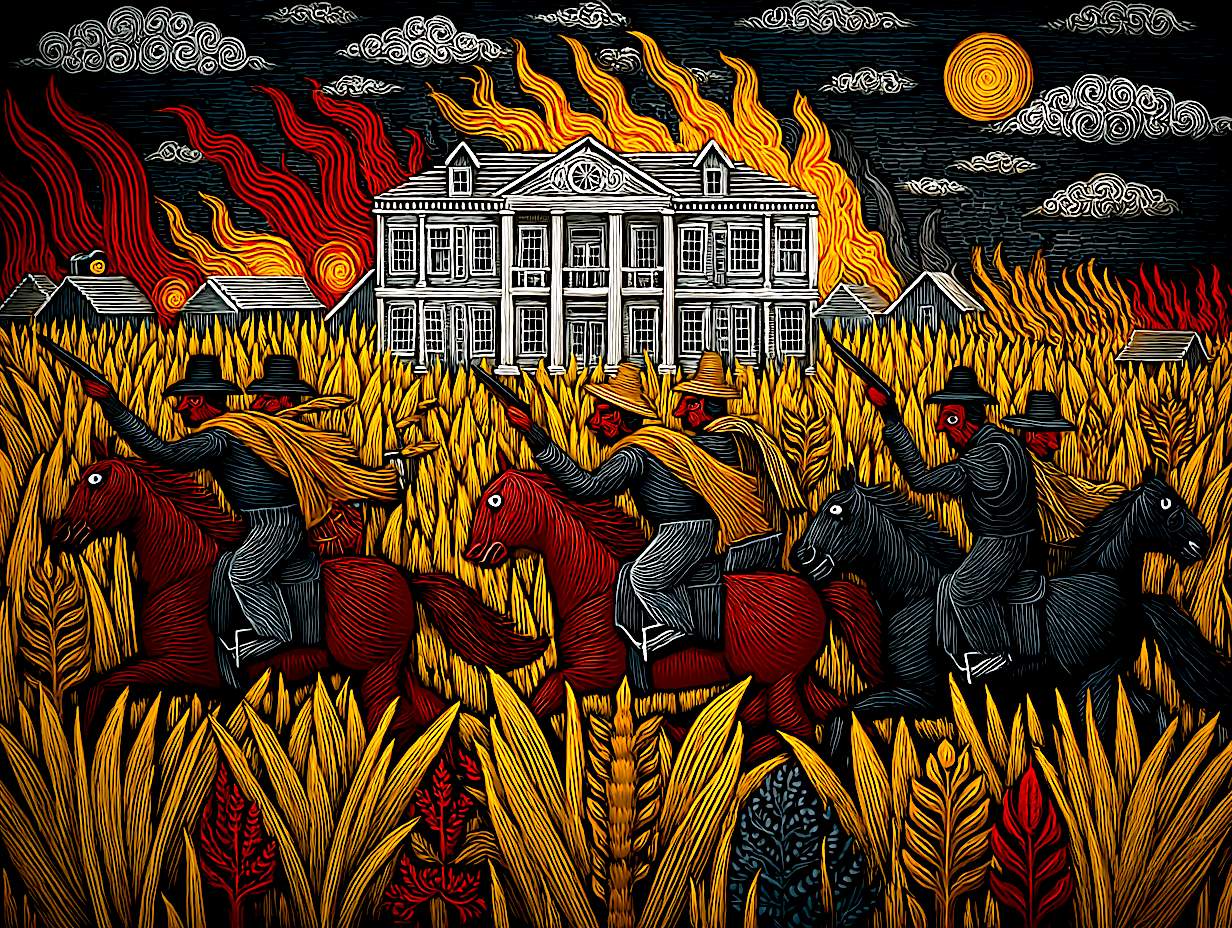
It is on a day like this when the cimarrones finally come, on the very last day of my punishment, right before the merchants come to pick up their barrels of molasses. Just as Evelina told me months before, they come after the crow of the third rooster, barrelling into the plantation in a group large enough to scare many of the maestros away. When they arrive, the sun is hiding behind the mountains far off in the horizon, and it casts a deep orange glow across the sky, bleeding into the dark blue of the night. The moon hides behind a blanket of clouds in the starless sky. Were it not for the fragments of orange shining through the clouds, I wouldn’t know if the sun and the stars and the moon all forgot they were meant to be on duty, and yet, there they are, above the plantation, above the onslaught of bullets and arrows that fly around the sugar fields, above the shouts of the cimarrones, all equipped with spears and arrows and even a few guns, crying: Para libertad! Para libertad!
When they take over the plantation, their bodies waxed in red and black paint, they give a final cry and urge us to join them. Some of the maestros fight back and are quickly impaled with spears; a fire is lit on the edge of the sugarcane field, causing many slaves to flee toward the orange sun sinking behind the mountains; bullets are shot into the air, into the crowd of cimarrones, and some fall. A few slaves, or those who run, fall.
The fire swells as the cries of slave and master alike fill the air, as people fight to break out of their chains, as children run from the fields and to their mothers, abandoning their work, their catch of mice, their stalk of sugarcane. I stand there at the mouth of the boiling house, my good arm wrapped around my stomach like a watch that cannot tell time, that has been trapped by it.
“Ana! Ana!” I hear, but I cannot see when Evelina comes running toward me. She wraps one arm around me, half-carrying-half dragging me onto a horse operated by a red-skinned man with long hair running down his back. “She’s pregnant,” I hear Evelina tells him.
Without pause, the man kicks his horse into a run, Evelina and the man’s bodies protecting me from both sides. Shouts erupt from the crowd of cimarrones, whose spears and clubs rise into the air victoriously. One of the men drags the body of a fallen maestro around the field. Other maestros fight back, shooting aimlessly as the cimarrones circle the field with an acute precision that only those native to the island would have been able to master.
The sky looks redder now. Fire ravages the sugar fields, smoke billows into the air, and bodies lay lifeless on the ground as the journey to freedom stretches out before me. But all I care about is Ocho.
I shour his name, struggling to get off the horse in search of the boiling house. “Ocho!”
“Stop!” Evelina says, trying desperately to pull me back onto the horse. “We have to go!”
At that moment, the sound of gunfire breaks through the crackling of the fire consuming the fields of sugarcane. “We must go!” the horseman says. “Your friend is lost!”
“No! We have to find him!” I shout. I climb down and start running again, back toward the boiling house, but the horseman rides alongside of me, Evelina seated directly behind him now. “Please! He’ll be close!”
“Here,” he says. “I’ll take you. Come quickly!”
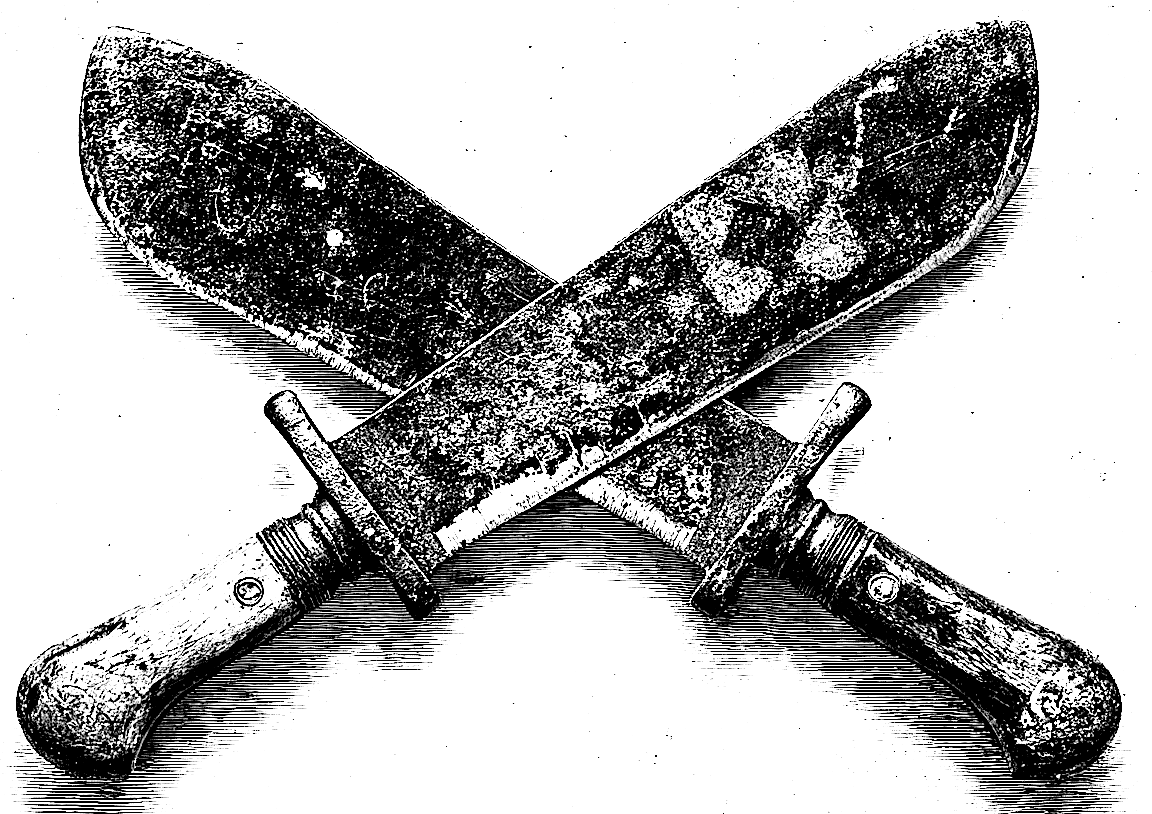
I nod, and he hoists me back onto the horse. In seconds, we are on our way to the boiling house, which has caught fire. The mill, no longer turning, is engulfed in flames. When we reach the door, we come to find that it has been locked. The screams of men and women seep through from the inside, and the horseman climbs down, breaking down the locks with his machete.
Sticky, half-burned men and women cascade onto the floor, and still, no sign of Ocho. “Help me move them!” I tell the horseman.
“We have no time! Get on now!” Evelina shouts, and those who can crawl back to safety. But I run inside in search for Ocho.
“Wait!” Evelina cries, following me into the flames. My eyes sting from the smoke; I can hardly keep them open, but they scan the room for anything that moves–a shadow, a hand, even a breath, and still, I find nothing. “We have to go now, Ana.”
“I need to find Ocho!” I say.
“He will find us, Ana. We have to go.” I stand there once more as if frozen by the fire, chilled by the flames.
“Don’t forget the promise we made our mothers,” she says. “You promised you’d stay with me.” And after all, I do remember.
Sadly, begrudgingly, I go.
THE MOUNTAINS ARE COOLER AT NIGHT, the moon brighter, thinner. I stay close to Evelina, who speaks for both of us now that I have nothing left to say. The men in the mountains are warm and rebellious; They share a single bible on Sunday mornings, and a majority of them walk with spears and fresh guns tied to their waists whether there is a threat of war or not. We live in homes made of sticks and leaves, in homes no better than a slave hut. I have only asked Evelina once if it was worth it. But I ask myself a million times.
Every day I roam the mountain with the children, who collect herbs and vegetables from the trees and bushes. One of the freed men from my plantation even brought some molasses. Others snuck in mounds of sugar. Still, I do not, cannot speak, and silence becomes my refugee. I fear leaving the mountain; I fear the whip, the pike, the noose that waits for me. Is this freedom really freedom? Is it freedom if I had no choice?
“Come here, Ana,” Evelina tells me as I return to the campsite with the daily harvest. She takes the baby, who coos at her touch and nestles into her arms. Some of the men have purchased wine and meat from a nearby town. I sit beside Evelina, facing the fire. A hog roasts in the spit, crackling and boiling under the setting sunlight. “Today is a day of celebration.”
The horseman from that day–I come to find his name is Domingo–is also one of the leaders of the cimarrones. He tells us that the latest rescue was a success despite the three cimarron casualties, and that the price for freedom, though hefty, is worth every penny, every drop of blood, every breath. But I struggle to agree, questioning if freedom was worth losing Ocho.
We sit on logs listening to his speech, waiting for the salted hog to cook above the fire. When he’s done, he tells a story. A story about a time when there was no light, no darkness, no sea. A time when the moon came out of a cave to form the morning and the night, when men were turned into birds and stone and trees. A time when women were formed by woodpeckers, handcrafted by gods. “I know this story,” I tell myself in a whisper so low I believe only God can hear me.
“What’d you say?” Evelina says, her eyes wide and wet. “You spoke!”
This time I say it louder, so Evelina can hear. “I know this story.” I think back to my mother, to her callused hands, her thick black waterfall of hair, the tiny triangular stone she’d left me that I abandoned on the sugar mill. “I lost my mother’s stone.”.
“Wait!” Evelina says, turning to search through her cloth sack. “Is it one of these?” She takes out a handful of stones, some smooth and dark, others yellow or red or other odd shades. And one triangular stone with a faint, thin carving. A carving created by my mother. “I took the prettiest ones. I know you loved your collection.”
Then the music begins to play; flutes and drums and people singing. So many sounds I never heard before, sounds I heard in my childhood, sounds I heard from Ocho. “These are the sounds of the Tainos, of the Kongo and Yoruba, and so many others,” Domingo says. “These are the sounds of your people!” and everyone begins to shout, to dance.
They begin to beat the drums in a rhythmic, melodious style, singing single-note songs and chanting hymns and prayers I do not understand. Everything sounds uniquely familiar, yet new. When the sun sets completely, once the hog has been roasted, everyone, even the children, get up and dance, stomping and clapping and spinning as the music encompasses the air around us, as if this is what freedom looks like. As if this is what it feels like to arrive where you belong.
“Dance, Ana. This is your birthright!” Evelina says, holding her hand out to me as the rest of her body moves and sways with the music. She holds the baby in her hand and leads me up. I rise, watching as those around me cheer and chant, thanking their gods for their freedom. At first, I gently step to the music, cautiously tiptoeing around the dancers, the mourners, and those like me, who are both. But as I move toward the fire, my movements syncing with the music. I can feel the heat on my face from the flames, the chill on my back from the wind, and for once I understand that being free means I can be two things at once, that I am not confined to the position of a slave, of a woman. That I can be something more, something bigger.
So I dance, moving around the cooked hog, around the drummers, around the singers. I dance with my mother’s stone and Ocho’s pebble held tightly in my palm, my bad arm raised in defiance. I fan both arms in the undulating waves of smoke and wind, spin so it forms a hurricane of warm air around me. I dance for my mother, for my brother, for Ocho, for myself.
Here, on this mountain, I dance: endlessly, resolvedly, as if searching for the family that I lost beyond the flames.
About the writer:
Jennifer Celeste is an Afro-Latinx writer born and raised in the greater NYC Area who graduated in the Spring of 2021 with an MA in English with a concentration in Creative Writing. Celeste served as a full-time graduate teaching assistant for two years, teaching introductory English Courses at Seton Hall University and serving as an editor in Corner Pocket, the SHU literary magazine. She have published in Inquiries Journal, NJEA Magazine, and Santa Fe Writers Project. Jennifer Celeste is currently a graduate student at Queens University of Charlotte pursuing an MFA in Creative Writing.
Image: Mandinga’s Maroons (AI-assisted digital image) by O:JA&L staff creative. 2025. Public domain via Midjourney AI.
OJAL Art Incorporated, publishing since 2017 as OPEN: Journal of Arts & Letters (O:JA&L) and its imprints Buttonhook Press, HOT BUTTON PRESS Contemporary Issues, and HIGH BUTTON PRESS Contemporary Art, supports writers and artists worldwide.
O:JA&L’S BUTTONHOOK PRESS MASTERS SERIES
Click on the titles below to explore or download the free PDF chapbooks in the O:JA&L Masters Series.
The Buttonhook Press Masters Series: Brian Clements on Prose Poetry
With an Interview by Associate Editor Pamelyn Casto
The Buttonhook Press Masters Series: Mark Budman on Flash Discourse
With an Interview by Associate Editor Pamelyn Casto
The Buttonhook Press Masters Series: Ray Gonzalez on Prose Poetry
With an Interview by Associate Editor Pamelyn Casto
The Buttonhook Press Master Series: Michael Martone on Flash Fiction
With an Interview by Associate Editor Pamelyn Casto
The Buttonhook Press Master Series: Roberta Allen on Flash Fiction
With an Interview by Associate Editor Pamelyn Casto
The Buttonhook Press Master Series: Peter Conners on Flash Fiction
With an Interview by Associate Editor Pamelyn Casto
The Buttonhook Press Masters Series: Maxine Chernoff on Prose Poetry
With an Interview by Associate Editor Pamelyn Casto
The Buttonhook Press Masters Series: Pedro Ponce on Flash Fiction
With an Interview by Associate Editor Pamelyn Casto
The Buttonhook Press Masters Series: Tom Hazuka on Flash Fiction
With an interview by Associate Editor Pamelyn Casto
MORE TITLES IN PRESS

