

HAL: Heuristic Algorithmic Library
American Chapbooks: Reconfiguring Literary and Artistic Prestige
Craft, Light, and the Democratization of Art
Larry D. Thomas’s STORIES BEGGING COLOR and the Expansion of American Ekphrasis
Click on the title STORIES BEGGING COLOR to explore or download the free PDF chapbook.
Click on the title Craft, Light, and the Democratization of Art to download the PDF pamphlet.
Larry D. Thomas has long been recognized as one of Texas’s most distinctive lyric voices, but his sustained engagement with ekphrasis places him in a broader national lineage of poets who use visual art as a catalyst for poetic inquiry. Across more than a decade of work—from The Skin of Light (2010) through Art Museums (2014), Bleak Music (2016), and his contribution to Vanishing Points (2016)—Thomas has developed a multifaceted ekphrastic practice that moves from descriptive clarity to philosophical meditation, from atmospheric austerity to cultural ritual. With the publication of Stories Begging Color in 2026, he brings this evolution to a culmination. Although modest in length, the chapbook is his most comprehensive and ambitious exploration of ekphrasis, expanding the American tradition through its multigenre sweep, its material intelligence, and its democratizing approach to the arts.
EXPANDING THE EKPHRASTIC FIELD: A MULTIGENRE SURVEY OF ARTISTIC MEDIA
American ekphrastic poetry has historically gravitated toward a narrow set of artistic media—primarily painting, sculpture, and photography. William Carlos Williams’s Pictures from Brueghel remains anchored in a single painter; Natasha Trethewey’s Bellocq’s Ophelia centers on a single photographic archive; Mark Doty’s Still Life with Oysters and Lemon meditates on a single still-life painting. Even when poets range more widely, they tend to remain within the boundaries of “fine art” as defined by museum culture.
Stories Begging Color breaks decisively from this model. Thomas engages not only painting and sculpture but also fine porcelain, stained glass, jewelry, murals, tempera, pastels, and even music. This breadth is unusual in American ekphrasis, which rarely ventures into the decorative or applied arts. Thomas treats each medium with equal seriousness, refusing to privilege oil on canvas over the craftsmanship of fired clay or faceted gemstones. The result is a chapbook that behaves like a miniature museum, one in which the boundaries between artistic disciplines dissolve and the full spectrum of human creativity becomes available to poetic attention.
MATERIAL INTELLIGENCE: CRAFT AS A FORM OF EKPHRASTIC AUTHORITY
One of the most distinctive features of Stories Begging Color is its attention to the technical processes behind artistic creation. While many ekphrastic poets focus on interpretation, narrative, or emotional resonance, Thomas turns his gaze toward the materials and methods that bring artworks into being. His poems demonstrate a rare familiarity with the physical labor of artmaking: the layering of tempera, the firing of porcelain, the grinding of pigments, the cutting and soldering of stained glass, the faceting of gemstones, the tactile resistance of sculptural media.
This material literacy gives Thomas a different kind of ekphrastic authority—one rooted not in psychological projection or historical reconstruction but in an intimate understanding of craft. In this respect, he aligns more closely with poets of material precision such as Elizabeth Bishop or Seamus Heaney than with traditional ekphrastic practitioners. Thomas’s poems do not merely describe artworks; they reveal the processes, tensions, and physical realities that underlie them. This emphasis on craft expands the possibilities of ekphrasis by grounding it in the tactile and the technical.
DEMOCRATIZING THE ARTS: CHALLENGING HIERARCHIES OF VALUE
By engaging media such as porcelain, jewelry, and stained glass, Thomas challenges the hierarchy that has long shaped the ekphrastic tradition. Decorative and applied arts have often been marginalized in both art history and poetry, dismissed as “craft” rather than “fine art.” Stories Begging Color rejects this distinction. Thomas’s poems treat each medium—regardless of its status in the museum world—as a site of beauty, labor, and artistic intelligence.
This democratizing impulse aligns the chapbook with contemporary movements in art history and material culture studies that seek to broaden the definition of artistic value. In Thomas’s hands, a piece of fine porcelain or a stained-glass window becomes as worthy of contemplation as a Renaissance painting. The chapbook thus expands the scope of American ekphrasis by insisting that the decorative arts are not peripheral but central to the human impulse to create.
OBJECT-CENTERED EKPHRASIS: A COUNTERPOINT TO NARRATIVE TRENDS
Much contemporary American ekphrastic poetry has taken a narrative turn. Trethewey reconstructs the lives of Bellocq’s subjects; Frank Bidart dramatizes the psychology of artists; Edward Hirsch uses artworks as portals into personal or historical stories. Thomas’s approach is markedly different. His poems in Stories Begging Color are non-narrative, object-centered, and meditative. They do not inhabit the figures in the artwork or reconstruct the artist’s biography. Instead, they focus on the object itself—its materials, its textures, its colors, its craft.
This object-first orientation restores ekphrasis to its classical roots while simultaneously modernizing it through technical detail. Thomas’s poems resist the temptation to turn artworks into stories; instead, they allow the artworks to remain themselves, insisting on the integrity of the object and the primacy of the sensory encounter.
CROSS-SENSORY EKPHRASIS: INCLUDING MUSIC IN THE VISUAL FIELD
One of the most striking features of Stories Begging Color is its inclusion of music alongside visual and tactile media. By placing music within the same conceptual frame as painting, sculpture, and decorative arts, Thomas expands ekphrasis into a cross-sensory practice. This synesthetic approach suggests that ekphrasis is not merely a response to images but a broader meditation on artistic creation across sensory modalities. In doing so, Thomas aligns himself with poets who explore perception in its full sensory complexity, while still maintaining his distinctive focus on craft and materiality.
A LATE-CAREER SYNTHESIS: THE CULMINATION OF THOMAS’S EKPHRASTIC EVOLUTION
Because Stories Begging Color arrives after more than a decade of ekphrastic work, it reads as a synthesis of Thomas’s evolving engagement with visual art. The descriptive clarity of The Skin of Light, the philosophical depth of Art Museums, the atmospheric austerity of Bleak Music, and the cultural resonance of Vanishing Points all converge in this chapbook. The result is a late-career statement that distills Thomas’s ekphrastic concerns into a concentrated, multifaceted exploration of artistic creation.
Despite its brevity, the chapbook feels expansive. It is at once a gallery, a workshop, a studio, and a meditation on the human impulse to shape materials into meaning. In this sense, Stories Begging Color stands as the most comprehensive and technically engaged ekphrastic project of Thomas’s career.
CONCLUSION: THOMAS’S CONTRIBUTION TO THE AMERICAN EKPHRASTIC CANON
Stories Begging Color occupies a distinctive place in American ekphrastic poetry. Through its multigenre sweep, its material intelligence, its democratizing approach to artistic media, and its object-centered poetics, the chapbook expands the boundaries of what ekphrasis can be. It challenges the hierarchy of fine and decorative arts, introduces craft knowledge as a form of poetic authority, and synthesizes decades of Thomas’s engagement with visual and material culture.
In doing so, Thomas offers a model of ekphrasis that is both deeply rooted in tradition and boldly innovative. Stories Begging Color is not merely a collection of poems about artworks; it is a meditation on the nature of artistic creation itself, and a significant contribution to the evolving landscape of American ekphrastic poetry.
BIBLIOGRAPHY
Bedell, Jack, Larry D. Thomas, Loueva Smith, and Sarah Cortez. Vanishing Points: Poems and Photographs of Texas Roadside Memorials. Texas Review Press, 2016. — A collaborative volume featuring black‑and‑white photography of descansos, with each poet contributing fifteen ekphrastic poems.
Doty, Mark. Still Life with Oysters and Lemon. Beacon Press, 2001.
Glück, Louise. The Triumph of Achilles. Ecco Press, 1985. — Includes several poems engaging classical sculpture and mythic statuary.
Hirsch, Edward. Lay Back the Darkness. Alfred A. Knopf, 2003. — Contains multiple ekphrastic poems responding to painting and photography.
Hollander, John. The Gazer’s Spirit: Poems Speaking to Silent Works of Art. University of Chicago Press, 1995.
Niedecker, Lorine. Collected Works. Edited by Jenny Penberthy, University of California Press, 2002.
Thomas, Larry D. The Skin of Light. Dalton Publishing, 2010.
—. Art Museums. Blue Horse Press, 2014.
—. Bleak Music: Poems and Photographs of the American Southwest. Blue Horse Press, 2016.
—. “Stories Begging Color.” Open: Journal of Arts & Letters, 2026. — A full ekphrastic chapbook published online.
Trethewey, Natasha. Bellocq’s Ophelia. Graywolf Press, 2002.
Williams, William Carlos. Pictures from Brueghel and Other Poems. New Directions, 1962.
Wright, Charles. Appalachia. Farrar, Straus and Giroux, 1998. — Not strictly ekphrastic, but influential in cross‑sensory poetics and phenomenology of perception.
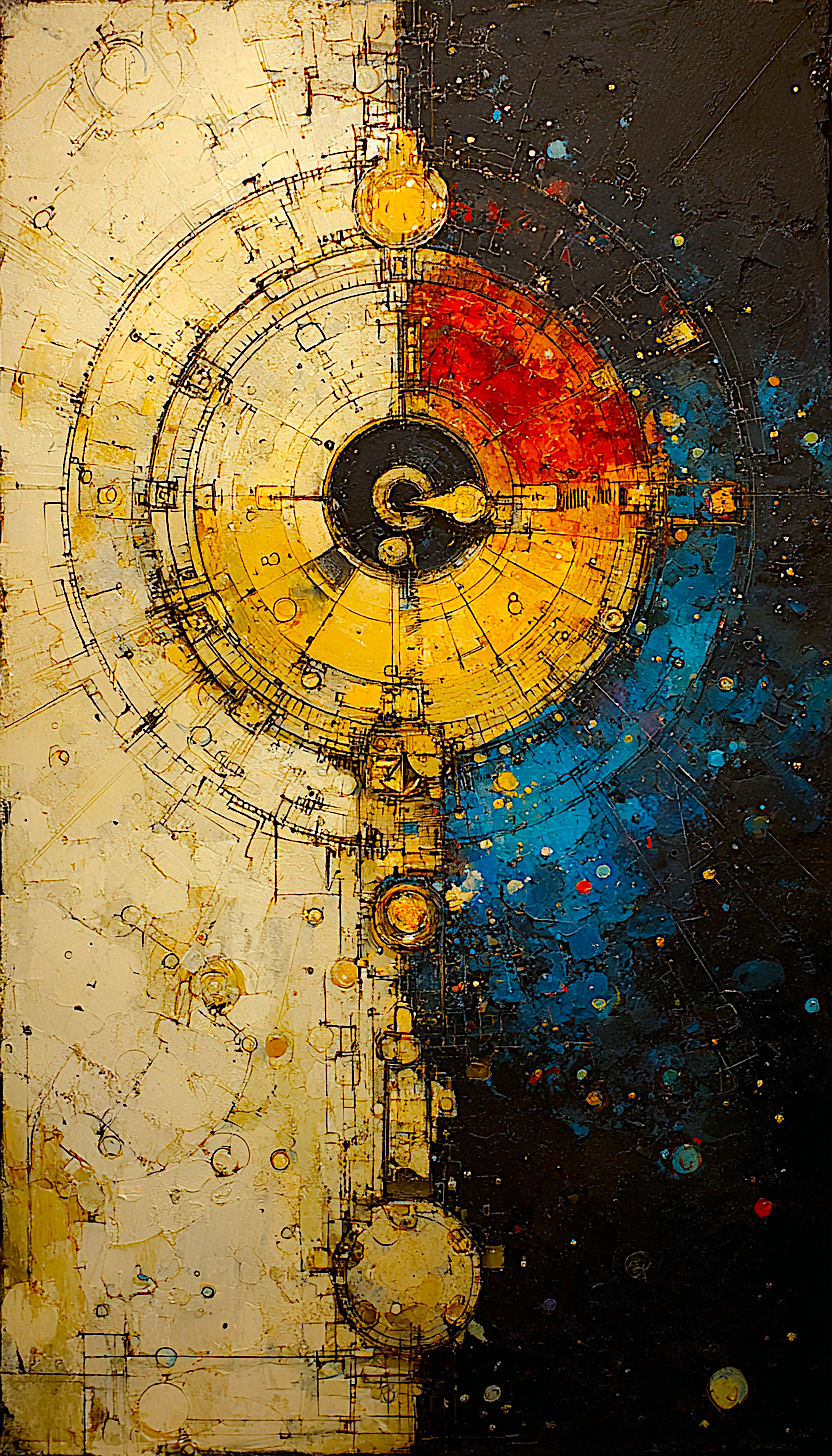
Image: I’m Sorry, Dave #11 (AI-assisted digital image) by O:JA&L staff creative. 2026. Public domain by Midjourney AI.
OJAL Art Incorporated, publishing since 2017 as OPEN: Journal of Arts & Letters (O:JA&L) and its imprints Buttonhook Press, HOT BUTTON PRESS Contemporary Issues, and HIGH BUTTON PRESS Contemporary Art, supports writers and artists worldwide.
HAL: Heuristic Algorithmic Library
Issues of Contemporary Aesthetics: A Series
Click on the titles below to explore or download the free PDF documents.
The Outrun by Julie Alden Cullinane: A REVIEW
Miro’s Wars by John Brantingham: A REVIEW
Stories Begging Color by Larry D. Thomas: A REVIEW
OPTIMAL OR NOT and other poems by Heikki Huotari: A REVIEW
Experimental Discourse: A Productive Labor
A consideration of the work of Jim Meirose
Larry D. Thomas and the Evolution of the American Chapbook
A consideration of the writing of Larry D. Thomas
Mick McGrath and the Samizdat Tradition
A consideration of the published prose of Mick McGrath
Richard Widerkehr: A Poet of Place, Memory, and Quiet Epiphany
A consideration of the poetry of Richard Widerkehr
The O:JA&L Masters Series
An introduction to the O:JA&L Masters series
BUTTONHOOK PRESS MASTERS SERIES
Click on the titles to explore or download the free PDF chapbooks.
The Buttonhook Press Masters Series: Brian Clements on Prose Poetry
With an Interview by Associate Editor Pamelyn Casto
The Buttonhook Press Masters Series: Mark Budman on Flash Discourse
With an Interview by Associate Editor Pamelyn Casto
The Buttonhook Press Masters Series: Ray Gonzalez on Prose Poetry
With an Interview by Associate Editor Pamelyn Casto
The Buttonhook Press Master Series: Michael Martone on Flash Fiction
With an Interview by Associate Editor Pamelyn Casto
The Buttonhook Press Master Series: Roberta Allen on Flash Fiction
With an Interview by Associate Editor Pamelyn Casto
The Buttonhook Press Master Series: Peter Conners on Flash Fiction
With an Interview by Associate Editor Pamelyn Casto
The Buttonhook Press Masters Series: Maxine Chernoff on Prose Poetry
With an Interview by Associate Editor Pamelyn Casto
The Buttonhook Press Masters Series: Pedro Ponce on Flash Fiction
With an Interview by Associate Editor Pamelyn Casto
The Buttonhook Press Masters Series: Tom Hazuka on Flash Fiction
With an Interview by Associate Editor Pamelyn Casto
The Buttonhook Press Masters Series: Kent Dixon on Flash Fiction & Nonfiction
With an Interview by Associate Editor Pamelyn Casto
The Buttonhook Press Masters Series: Jim Meirose on Experimental Discourse
With an interview by Associate Editor Warwick Newnham
O:JA&L’S HIGH BUTTON PRESS ART CHAPBOOKS
Click on the titles to explore or download the free PDF chapbooks.
RITES OF CALIBRATION: Images & Excerpts
Fine Art Photography by Rex Wilder
Fine Art Photography by Natalie Christensen
Painting and drawing by Anne-Marie Brown
BY LAND AND BY SEA: Awakening the Sensual
Sculpture and Installation by Mark Yale Harris
Painting and drawing by Bette Ridgeway
Painting and drawing by Kathleen Frank
Painting and drawing by Catherine Eaton Skinner
Implications of Energy
Artist portfolio of Dr. Ernest Williams III

