 Submit
The O:JA&L Masters Series|Flash Fiction|Featured Writer: Tom Hazuka|Interview||”Associate Editor Pamelyn Casto|talks with writer Tom Hazuka”

Jeff Streeby
November 14th, 2025


The 2025 O:JA&L Masters Series: Flash Fiction
Featured Writer Interview
ASSOCIATE EDITOR PAMELYN CASTO
INTERVIEW WITH FEATURED WRITER TOM HAZUKA
TOM HAZUKA has published the novels The Road to the Island, In the City of the Disappeared and Last Chance for First, as well as seventy short stories, two books of nonfiction (both co-written with C.J. Jones), and a memoir, If You Turn to Look Back, which explores his return to Chile twenty-three years after he was a Peace Corps Volunteer there during the Pinochet dictatorship. Visible Human, a collection of his flash fiction, was published in 2025. He has edited or co-edited ten anthologies, including Flash Fiction, Flash Fiction Funny, Flash Nonfiction Funny, Sudden Flash Youth, A Celestial Omnibus, You Have Time for This and Flash Nonfiction Food. Tom is also a singer-songwriter; links to his writing and original songs can be found at tomhazuka.com. He taught fiction writing at Central Connecticut State University for many years.
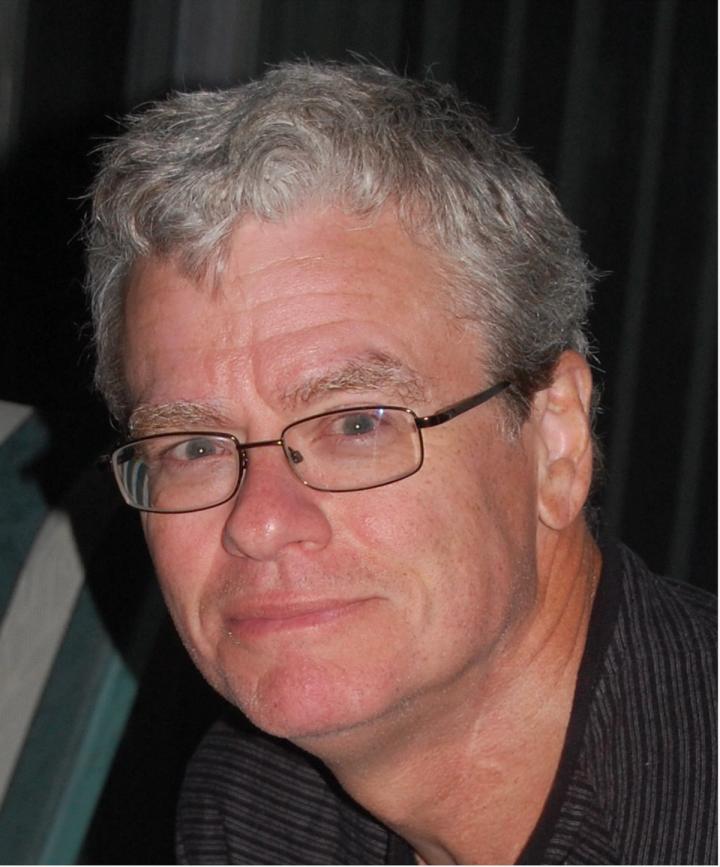
Tom Hazuka (Courtesy of the writer)
Casto for O:JA&L: Congratulations on the publication of your new collection, Visible Human. Robert Shapard calls it brilliant and says the stories are “raw, acerbic, soulful, funny.” What finally inspired you to get a collection of your own flash fiction pieces published? Over how many years do these stories span?
Tom Hazuka: I’ve been publishing flash fiction for over forty years, somehow with hardly a thought of gathering them in a collection. Individual flash stories have been included in numerous anthologies, including some that I edited (hey, I know good stuff when I see it!), but only recently did I start thinking that I could put together a compelling selection of my own work. The book is quite long for a flash collection (126 pages), so I soon decided to group the stories into eight sections: Family Matters; Nests and Other Things to Leave; Working It; Off the Road; Till Sex Do Us Part; That’s Not Funny; Second Acts; and Pretty Good Americans.
Casto for O:JA&L: You have been heavily involved in the flash fiction world ever since your ground-breaking collection, Flash Fiction: 72 Very Short Stories (edited by you, James Thomas, and Denise Thomas). It’s still one of my favorite anthologies and it includes work by such fine writers as Spencer Holst, Francine Prose, Stuart Dybek, Raymond Carver, Russell Edson, Pamela Painter, David Foster Wallace, Robert Hill Long, Julio Cortázar, Michael Martone, John Updike, Gordon Lish, Joyce Carol Oates, Margaret Atwood, Ronald Wallace, Diane Williams, and many other fine writers. It’s a timely book, just as relevant today as it was in 1992 when it was first published. What first attracted you to short-short work? For this anthology, did you mostly invite certain writers to submit their work, or did you issue a general call for submissions? If you invited writers, how did you choose who to invite? What kind of collection method did you use? How long did it take you to collect all the pieces?
Tom Hazuka: My first experience with flash fiction was writing a 250-word story once a year to enter the Sun Dog World’s Best Short-Short Story Contest, which started in 1986. I never won the prize of $100 and a case of Florida oranges, though I managed an honorable mention or two. I then helped Robbie Shapard and James Thomas by reading and critiquing stories for their groundbreaking anthology Sudden Fiction (Peregrine Smith Books, 1986), and especially Sudden Fiction International (W.W. Norton, 1989). Both of those books contain stories that we would now call flash fiction (750 words maximum), rather than sudden fiction (up to 2000 words). We were still figuring things out—as evidenced by Sudden Fiction’s working title: Blasters. I’m not sure that name would have caught on the way “flash fiction” has.
If memory serves, we began work on Flash Fiction in 1989. The world was far different then, and for editors, far more difficult—and for that matter, far more expensive. There was no Internet, no email, no cell phones. I spent countless hours combing the stacks in the University of Utah library, searching through literary magazine tables of contents for stories short enough to fit our limit, then feeding coins into the library’s Xerox machine to copy them. I would hand the pages to James Thomas, who compiled packets, got them bound at Kinko’s, and passed them on to other readers (often via U.S. mail) for them to evaluate. James solicited work from a few writers, but most of the stories came from literary magazines. You couldn’t just search the Internet for stories, put out calls for submissions on social media, or solicit work via email the way we can today—for free. Our clunky methods involved copying costs, binding costs, mailing costs, and of course long-distance phone bills. But hey, we had it all over medieval monks at their copy desks. We had Xerox machines!
Casto for O:JA&L: In your Flash Fiction collection, the original goal set a maximum of two pages, around 750 words, in order to have each story be apprehended “all at once,” “seen in a flash” so there would be “no enforced pause in the reader’s concentration, no break in the field of vision.” However, you found the arrangement to be physically monotonous, likely because readers enjoy turning pages. As a result of that realization, most of your stories in Flash Fiction are on at least two pages, a maximum of three. Do you still view this concept of flash fiction as helpful or useful? What do you think is attractive about even shorter works, like micro fiction? Or longer works, like sudden fiction? What other challenges or difficulties does writing or reading such short stories present?
Tom Hazuka: Truth be told, I was agnostic about the page layout options and was fine with whatever choice James Thomas and W.W. Norton made. I didn’t think readers would notice or care much one way or another. The stories in Visible Human range from 50 to 750 words, covering from one to three pages. Some start on the left page, some on the right. I spent considerable time and effort on the order and arrangement of the stories, then trusted the typesetter to make them look good on the page and it worked out fine.
For me, the issue only arises on those very rare occasions when I’m engrossed in a story, turn a page—and realize the story had ended on that last line of the previous page!
What’s attractive about fiction, no matter the length, is the quality of the writing. I define art as something that changes the person experiencing it and makes people more than they were before, even if only minimally, even if only temporarily. Good writing is definitely art.
Casto for O:JA&L James Thomas says in Flash Fiction, “Like all fiction that matters, their success depends not on their length but on their depth, their clarity of vision, their human significance—the extent on which the reader is able to recognize in them the real stuff of real life.” Many pieces, particularly those published online, do come across as “slight.” Which part of Thomas’s description seems most important for new writers to understand or need to work on hardest to keep from coming across to editors and readers as less than works of substance?
Tom Hazuka: By “slight” I assume you mean a story that leaves a reader asking, “So what?” We’ve all read plenty of those. Commonly these stories rely on a clever angle or twist for their effect, which is fine as far as it goes. Cleverness can certainly be a virtue, and it’s a quality I often admire in a piece of writing, especially humorous writing. But cleverness without something to say is usually quickly forgotten. Many beginning writers think (or at least hope) that cleverness is enough because they haven’t yet learned how to dig deep enough to discover what their story is truly about. Please note the word “discover.” Being open to possibilities you hadn’t thought of, and discovering what your story is about through a series of drafts almost always leads to better results than writing simply to achieve a preconceived effect or being satisfied with a first draft that sparkles but would benefit from some messy digging. To write your best fiction, “good enough” is not.
Casto for O:JA&L: Another of your anthologies I enjoy is one you co-edited with Mark Budman, You Have Time for This: Contemporary American Short-Short Stories (2007). All these stories are 500 words or fewer. Some of the fine writers include Katharine Weber, Steve Almond, Sherrie Flick, Pamela Painter, Jessica Treat, Pedro Ponce, Bruce Boston, Bruce Holland Rogers, Aimee Bender, and others. In that anthology, Mark Budman wrote that “Rich, literary fiction can never be completely understood by writer, by editor, or by reader. Various possible interpretations are always possible. That’s why authors need intelligent readers to cooperate in the process of making sense of a text.” Could that be why some short pieces are viewed as slight, when they display no ambiguity? Do you think co-creation between the writer and the reader is important to good work? Or would this describe the more literary types of writing?
Tom Hazuka: Ambiguity and co-creation by writer and reader are hallmarks of literary fiction, but it’s crucial to distinguish two types of ambiguity. Ambiguity arising from plot problems or sloppy sentences is a result of lazy or incompetent writing that annoys the reader and undermines the writer’s ethos. Creative, interesting ambiguity nearly always arises from character, because motives for characters’ actions can be myriad, murky and mysterious, even to the characters themselves. Probing those motives is a big part of the discovery process I discussed in my answer to your previous question.
Casto for O:JA&L: I also enjoyed your anthology Flash Fiction Funny: 82 Very Short Humorous Stories (2013). Some of the fine writers in that anthology are Meg Pokrass, Robert Scotellaro, Stuart Dybek, Kim Addonizzio, Tara L. Masih, Dinty W. Moore, Ron Carlson, Allen Woodman, and others. Humor usually works best if it’s short and quick, so creating an anthology of humorous stories seems like it could be a daunting task. Was it difficult to find stories humorous enough to suit you? Or did the gathering of the stories broaden your own notion of humor? Why do you think humor is often so subjective?
Tom Hazuka: It was challenging to find enough funny stories to fill a book. During my search I read hundreds of supposedly humorous pieces that didn’t make me laugh. On the other hand, some authors had multiple stories that cracked me up, and I briefly considered including more than one story by several writers. As to why humor is so subjective, I’m baffled--to the extent that I don’t even have a decent theory to explain why many people find Fleabag and The Big Bang Theory funny, yet my wife and I can’t make it through a single episode.
Casto for O:JA&L: The one titled Flash Nonfiction Food: 91 Very Delicious, Very True, Very Short Stories (2020) is one I’ve not explored yet, but it sounds quite interesting. Plus, it’s flash nonfiction instead of flash fiction. What sorts of challenges did compiling the nonfiction anthology present? Please provide information about any other flash fiction anthologies you have published, so readers can easily locate them all.
Tom Hazuka: Flash Nonfiction Food was my first editorial collaboration with a former student at Central Connecticut State University, Kathryn Fitzpatrick. (Later I co-edited Operation Panic: Cold War Stories of the Atomic Bomb with former student Jimmy J. Pack.) I had learned a lot about editing nonfiction from Dinty W. Moore, my co-editor on Flash Nonfiction Funny. The process is similar to editing a flash fiction anthology, with the added requirement that the pieces must treat events that really happened. Fiction is a freer genre than nonfiction because imagination is not only allowed but encouraged to roam at will. Dinty taught me plenty about distinguishing between the two. In both books we reluctantly excluded several fine pieces that strayed too far into fictional territory.
My flash anthologies:
Flash Fiction (with James and Denise Thomas, 1992)
You Have Time for This (with Mark Budman, 2007)
Sudden Flash Youth (with Christine Perkins-Hazuka and Mark Budman, 2011)
Flash Fiction Funny (2013)
Short on Sugar, High on Honey, 7-13 Word Love Stories (with Mark Budman, 2018)
Flash Nonfiction Funny (with Dinty W. Moore, 2018)
Flash Nonfiction Food (with Kathryn Fitzpatrick, 2020)
Collection of my own flash fiction:
Visible Human (2025)
Casto for O:JA&L: Have you ever taken any of your longer stories and whittled them down to flash fiction length? Were the stories improved as a result? In what ways? Have you ever taken any of your stories and gone from short to a longer story? You’ve written novels, The Road to the Island, In the City of the Disappeared, and Last Chance for First, so I’m curious if any of your novels began as flash fiction pieces?
Tom Hazuka: I don’t recall ever reducing a longer story to flash fiction length, although I have taken pieces of longer works to create separate flash fictions. I explored the concept in Visible Human with “Drive Fast, Take Chances” (published in 100 Word Story) and “The Downside of Anything” (published in Inscape), two versions of the “same” story, the first at 100 words, the second at about two pages. I put them back-to-back so they’re easy to compare. I hope readers are pleasantly surprised by the experiment.
The Road to the Island began as a novel composed of individual flash fictions, each of which ostensibly could stand alone (and be published in magazines). Inside of twenty pages, though, the format became unworkable. A 750-word limit per chapter felt too restrictive, and it was clunky to introduce characters (and sometimes settings) that the reader of an individual story would need, but a reader of the novel would find repetitive and annoying. (Yes, Tom, we already know Gary is the narrator’s brother; you don’t need to tell us again!) Flash fiction is in the book’s DNA, though. Outside of one long chapter at the center of the novel, the chapters are relatively short.
Casto for O:JA&L: Well, I thank you for being so generous with your thoughts. You have provided us with so much to think about and will no doubt inspire several ideas in our readers. It’s been a pleasure.
ABOUT THE INTERVIEWER:
PAMELYN CASTO, twice a Pushcart Prize nominee, has published feature-length articles on flash fiction in Writer’s Digest (and in their other publications), Fiction Southeast, and Writing World (and elsewhere). Her essay on flash fiction and myth appears in Rose Metal Press’s Field Guide to Writing Flash Fiction: Tips from Editors, Teachers, and Writers in the Field and her 8,000-word essay on flash fiction is included in Books and Beyond: The Greenwood Encyclopedia of New American Reading (4 volumes). She also has a 5,000-word article on flash fiction as the lead article in the new book Critical Insights: Flash Fiction. Subscribe to her free online monthly flashfictionflash newsletter (first issue published in 2001) for markets, contests, and publishing news for flash literature writers. Casto is an Associate Editor at O:JA&L. Pamelyn Casto's new book Flash Fiction: Alive in The Flicker (A Portable Workshop), a new release from O:JA&L's Buttonhook Press, is available now on Amazon.
This project was made possible, in part, through support from
Grayling and Wraith, a growth marketing company.
OJAL Art Incorporated, publishing since 2017 as OPEN: Journal of Arts & Letters (O:JA&L) and its imprints Buttonhook Press, HOT BUTTON PRESS Contemporary Issues, and HIGH BUTTON PRESS Contemporary Art, supports writers and artists worldwide.
O:JA&L’S BUTTONHOOK PRESS MASTERS SERIES
Click on the titles below to explore or download the free PDF chapbooks in the O:JA&L Masters Series.
The Buttonhook Press Masters Series: Brian Clements on Prose Poetry
With an Interview by Associate Editor Pamelyn Casto
The Buttonhook Press Masters Series: Mark Budman on Flash Discourse
With an Interview by Associate Editor Pamelyn Casto
The Buttonhook Press Masters Series: Ray Gonzalez on Prose Poetry
With an Interview by Associate Editor Pamelyn Casto
The Buttonhook Press Master Series: Michael Martone on Flash Fiction
With an Interview by Associate Editor Pamelyn Casto
The Buttonhook Press Master Series: Roberta Allen on Flash Fiction
With an Interview by Associate Editor Pamelyn Casto
The Buttonhook Press Master Series: Peter Conners on Flash Fiction
With an Interview by Associate Editor Pamelyn Casto
The Buttonhook Press Masters Series: Maxine Chernoff on Prose Poetry
With an Interview by Associate Editor Pamelyn Casto
The Buttonhook Press Masters Series: Pedro Ponce on Flash Fiction
With an Interview by Associate Editor Pamelyn Casto
The Buttonhook Press Masters Series: Tom Hazuka on Flash Fiction
With an interview by Associate Editor Pamelyn Casto
The Buttonhook Press Masters Series: Kent Dixon on Flash Fiction & Nonfiction
With an interview by Associate Editor Pamelyn Casto
MORE TITLES IN PRESS

- 2025 Masters Series
- academic writing
- article: flash fiction
- available titles
- buttonhook press
- Casto interviewer
- chapbook series
- creative writing
- explication
- Featured writer
- Featured Writer Interview
- fiction
- flash fiction
- interpretation
- litcrit
- literary arts
- literary criticism
- O:JA&L Masters Series
- prose poetry
- textual criticism
- Tom Hazuka